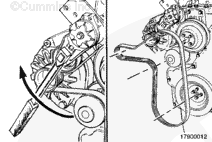
If the fan is belt-driven, a slipping belt will result in a slower fan speed and reduced cooling. A malfunctioning automatic belt tensioner can be the problem.
NOTE: Check the bearings in the fan hub and other pulleys to make sure they are not causing excessive belt vibration and slippage.
Some applications use thermatic fans. These fans operate only as needed to keep the coolant at the correct temperature. If the fan does not operate when the coolant temperature increases, the engine will run hot. If the fan does not shut off when coolant temperature decreases, the engine will run cold.
NOTE: Make sure the temperature sensor is functioning correctly.
NOTE: The belt tensioner is spring-loaded and must be pivoted away from the drive belt. Pivoting in the wrong direction can result in damage to the belt tensioner.
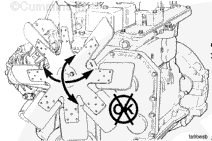
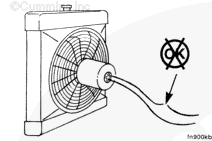
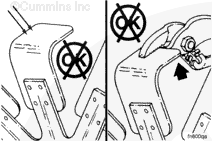
Do not straighten a bent fan blade or continue to use a damaged fan. A bent or damaged fan blade can fail during operation and cause personal injury or property damage.
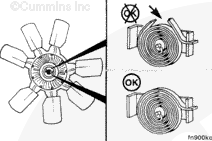
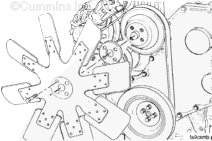
Inspection of the cooling fan is required daily. Check for cracks, loose rivets, and bent or loose blades. Check the fan to make sure it is securely mounted. Tighten the capscrews, if necessary.
Do not straighten a bent fan blade or continue to use a damaged fan. A bent or damaged fan blade can fail during operation and cause personal injury or property damage.
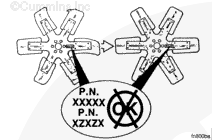
Replace original equipment fan that is damaged with a fan of the identical part number. Cummins Engine Company must
approve any other fan changes to be covered under warranty.
Hello, I'm Jack, a diesel engine fan and a blogger. I write about how to fix and improve diesel engines, from cars to trucks to generators. I also review the newest models and innovations in the diesel market. If you are interested in learning more about diesel engines, check out my blog and leave your feedback.
View all posts by Jack



 WARNING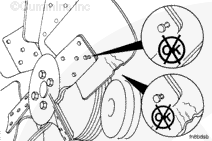


;)
;)
;)
;)
;)
;)
;)
;)
;)
;)
;)
;)
;)
;)
;)
;)
