Perform this test in conjunction with troubleshooting the air compressor pumping oil into the air system.
NOTE: Small oil deposits at the air dryer purge valve are normal. The air compressor is lubricated with engine oil, and small amounts of carryover are to be expected. Oil carryover is more common on naturally aspirated air compressors.
The air discharge line and other equipment will become hot during the course of the test. To prevent burns, use protective gloves when touching heated surfaces.
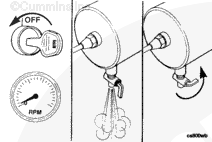
Start the engine and run until the coolant temperature reaches normal operating temperature. Once the coolant has reached operating temperature, shut the engine down and completely drain the vehicle air system.
The discharge from the air compressor will be hot, possibly contain oil vapors, and will be noisy. Make sure there is adequate ventilation and hearing protection is worn, particularly if the type of vehicle requires the test be conducted in an enclosed environment.
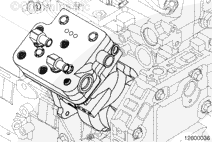
Disconnect the discharge pipe from the air compressor cylinder head.
Disconnect the air inlet plumbing at the air compressor cylinder head.
Connect the oil carryover test tool, Part Number 4918883, to the air compressor cylinder head discharge port.
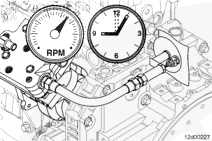
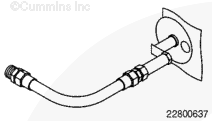
NOTE: If the application presents restricted access to the air compressor, a high temperature flexible hose (minimum 15 mm [0.6 in] inside diameter) may be connected directly to the discharge port of the compressor, in order to carry out the test outside the engine compartment.
Install the test paper into the service tool, Part Number 4918883. Make sure it is held at a right angle to and in line with the flow of compressed air, at a distance, not to exceed 100 mm [3.9 in] from the end of the compressor discharge pipe, or flexible hose, if fitted.
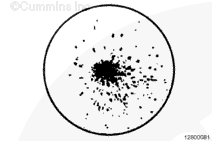
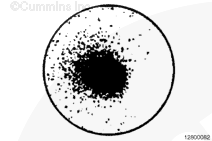
The test paper can be standard clean copier paper, typically 80 grams/sq meter. It must be mounted in the air compressor discharge line tool, leaving a 70 mm [2.76 in] diameter circle of the paper exposed. The outline of the circle in the mask must be drawn onto the test paper to later aid in comparison.
To perform the test, start the engine and run at high idle. Leave the test paper in the airflow for exactly 5 minutes. Remove the test paper, or rotate the tool mask exposing a new circular test area.
Repeat this test until 3 comparable circular test areas are generated.
Shut the engine down.
NOTE: If the maximum engine speed, without VSS, was adjusted in the previous step, change it back to the original value upon completion of the test.
Hello, I'm Jack, a diesel engine fan and a blogger. I write about how to fix and improve diesel engines, from cars to trucks to generators. I also review the newest models and innovations in the diesel market. If you are interested in learning more about diesel engines, check out my blog and leave your feedback.
View all posts by Jack


 WARNING



;)
;)
;)
;)
;)
;)
;)
;)
;)
;)
;)
;)
;)
;)
;)
;)
;)
;)
