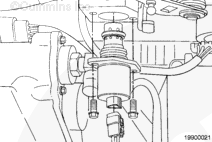
Check the fuel control valve for a malfunction (sticking). This procedure should be performed with the vehicle on the road or on a dynamometer.
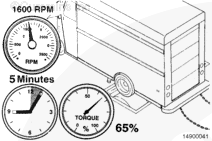
Select an engine speed between 1500 rpm and 2000 rpm. The particular speed selected is not important, but the same speed should be maintained throughout the test.
NOTE: If it is known, run the engine at a speed where a performance problem has been experienced.
This test is to check the value of the fuel control valve command at several different times during the test, when the engine is at a given speed and load.
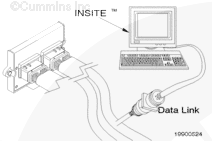
Fuel control valve command is an INSITE™ electronic service tool monitor mode parameter. For more information on INSITE™ electronic service tool monitor mode, go to Section F.
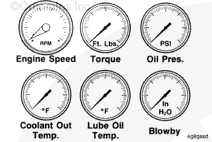
Use INSITE™ electronic service tool monitor mode, the data can be either recorded manually or the data can be captured using the data logger function.
For more information on INSITE™ electronic service tool monitor mode, go to Section F.
At different times during this procedure, record the fuel control valve command when the engine is at a chosen rpm under the same load conditions.
On a road test, use a set rpm. A constant load can be achieved by operating the vehicle on a level road.
Record engine data only after the desired rpm and load condition have been maintained for several seconds.
Hello, I'm Jack, a diesel engine fan and a blogger. I write about how to fix and improve diesel engines, from cars to trucks to generators. I also review the newest models and innovations in the diesel market. If you are interested in learning more about diesel engines, check out my blog and leave your feedback.
View all posts by Jack



;)
;)
;)
;)
;)
;)
;)
;)
