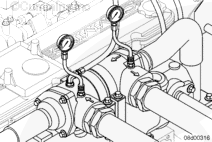
The temperature and pressure differential tests can be conducted at the same time, if the pressure connection allows the temperature probe to enter the coolant flow completely.
Operate the engine under rated rpm and load until the engine temperature reaches its maximum. Record the inlet and outlet coolant temperature.
A temperature differential of 25°C [45°F] or greater is required for adequate system cooling. If the temperature differential meets this specification, test the coolant pressure differential.
If the temperature difference is less than 25°C [45°F], inspect the vessel’s keel coolers. Some problems with keel coolers that can cause a high coolant temperature differential include:
keel cooler size is too small
seawater temperature is too hot
marine growth on the keel cooler
fouling to the inside of the keel cooler
internal damage to the keel cooler
external damage to the keel cooler.
Refer to the keel cooler OEM for troubleshooting and repair manual.
Operate the engine under rated rpm and load until the engine temperature reaches it’s maximum. Record the inlet and outlet coolant pressure. If the pressure difference is less than 34 kPa [5 psi], remove and test the keel cooler thermostat. Refer to Procedure 008-014.
If the pressure difference is greater than 34 kPa [5 psi], inspect the vessel’s keel coolers. Some problems with keel coolers that can cause high differential pressure are:
blockage in the keel cooling system
internal damage to the keel cooler.
Refer to the OEM for troubleshooting and repair manual.
Hello, I'm Jack, a diesel engine fan and a blogger. I write about how to fix and improve diesel engines, from cars to trucks to generators. I also review the newest models and innovations in the diesel market. If you are interested in learning more about diesel engines, check out my blog and leave your feedback.
View all posts by Jack



;)
;)
;)
;)
;)
;)
