Batteries can emit explosive gases. To reduce the possibility of personal injury, always ventilate the compartment before beginning servicing the batteries. To reduce the possibility of arcing, remove the negative (-) battery cable first and attach the negative (-) battery cable last.
It will be necessary to choose a location for mounting the heavy-duty Centinel™ control module. Location of the Centinel™ control module should provide visibility of the diagnostic lamps to operators and maintenance personnel.
Recommended locations include:
Inside the cab
On the frame rail
On the rear of the cab.
NOTE: Do not mount the Heavy-Duty Centinel™ control module
under the hood or in the engine compartment. The Centinel™ control module is not designed (or covered by warranty) for engine compartment temperatures.
For engines that do not have a 6-pin datalink connector by the ECM, it is necessary to install two wires for the datalink inside the cab. These wires will be spliced into the J1587 datalink connector. These will be the same wires that are routed to the datalink, usually located under the dashboard. Locate the wires that lead to this connector and connect as specified in the following table:
Overheating of the butt splice can lead to wire damage.
Butt splices also provide protection against corrosion. After crimping the connection, heat the shrink tube with a heat gun until the shrink tube has sealed the joint.
On the Centinel™ wiring harness, locate the two wire connectors labeled LOW OIL LEVEL SENSOR. Cap the connector with the jumper harness found in the burn-only conversion kit.
NOTE: The burn-only Centinel™ system uses the same harness as the standard Centinel™ system. As the standard system uses a make-up oil tank with a low oil level switch/sensor, in the burn-only system this sensor pickup in the harness must be jumped (to simulate a tank with adequate make-up oil) for the Centinel™ control module to operate the system properly.
NOTE: The Centinel™ wiring harness is about 20 feet long. Depending on where the Centinel™ control module or lamp box is located, there can be a considerable length of excess harness. This excess must
be rolled together and securely tie-wrapped out of the way.
For engines that do not have a 6-pin datalink connector by the ECM, it is necessary to install two wires for the datalink inside the cab. These wires will be spliced into the J1587 datalink connector. These will be the same wires that are routed to the datalink, usually located under the dashboard. Locate the wires that lead to this connector and connect as specified in the following table:
Overheating of the butt splice can lead to wire damage.
Butt splices also provide protection against corrosion. After crimping the connection, heat the shrink tube with a heat gun until the shrink tube has sealed the joint.
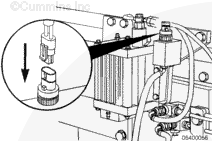
Install the Centinel™ jumper harness between the engine harness
(6-pin connector) and the control valve solenoid (2-pin connector).
Verify that the connector locks are engaged.
NOTE: For burn-only, pins 24 and 25 of the 31-pin OEM connector must be jumped to simulate adequate oil is available in the make-up tank, even though there is no make-up tank.
Locate the jumper wiring harness in the burn-only valve and mounting or conversion kit.
Locate the 31-pin OEM interface connector on the side of the engine block.
Disconnect the 31-pin OEM connector. Locate pins 24 and 25 in the OEM interface connector, and remove the connector cavity plugs in the 24-
and 25-pin locations.
Install the two female sockets of the jumper harness (supplied in the kit) into pins 24 and 25.
NOTE: Make certain the sockets “snap” solidly into place.
Reconnect the OEM 31-pin connector, making absolutely certain the connector is solidly locked in place.
Use provided tie wraps to secure the remainder of the oil make-up level sensor leads to avoid chafing and to make sure no stress is applied to the pin sockets.
Cut the wires to size and butt-splice appropriate female socket connectors
(Cummins Part Number 3822921 – not furnished with the kit) to the number 16-gauge wires.
NOTE: Cummins Part Number 3822921 is a common repair item found in the Cummins harness repair kit(s).
Connect the 31-pin OEM connector, making sure the connector is securely locked in place.
Use the provided tie wraps to secure the remainder of the oil make-up level sensor leads to avoid chafing and to make sure no stress is applied to the pin sockets.
NOTE: The following step is for N14 CELECT™ and CELECT™ Plus engines with Burn-Only applications.
It will be necessary to choose a location for mounting the heavy-duty Centinel™ control module. Location of the Centinel™ control module should provide visibility of the diagnostic lamps to operators and maintenance personnel.
Recommended locations include:
Inside the cab
On the frame rail
On the rear of the cab.
NOTE: Do not mount the heavy-duty Centinel™ control module
under the hood or in the engine compartment. The Centinel™ control module is not designed (or covered by warranty) for engine compartment temperatures.
For engines that do not have a 6-pin datalink connector by the ECM, it is necessary to install two wires for the datalink inside the cab. These wires will be spliced into the J1587 datalink connector. These will be the same wires that are routed to the datalink, usually located under the dashboard. Locate the wires that lead to this connector and connect as specified in the following table:
Overheating of the butt splice can lead to wire damage.
Butt splices also provide protection against corrosion. After crimping the connection, heat the shrink tube with a heat gun until the shrink tube has sealed the joint.
On the Centinel™ wiring harness, locate the two wire connectors labeled LOW OIL LEVEL SENSOR. Cap the connector with the jumper harness found in the burn-only conversion kit.
NOTE: The burn-only Centinel™ system uses the same harness as the standard Centinel™ system. As the standard system uses a make-up oil tank with a low oil level switch/sensor, in the burn-only system this sensor pickup in the harness must be jumped (to simulate a tank with adequate make-up oil) for the Centinel™ control module to operate the system properly.
NOTE: The Centinel™ wiring harness is about 20 feet long. Depending on where the Centinel™ control module or lamp box is located, there can be a considerable length of excess harness. This excess should be rolled together and securely tie-wrapped out of the way.
NOTE: It is very important that the Centinel™ system be properly grounded.
NOTE: For applications where the engine block is electrically isolated from the negative (-) battery terminal, the block ground lead on the Centinel™
harness must be connected to the negative (-) battery return line instead of the mounting bracket bolted on the engine.
Locate the black harness ground lead and fasten it to the oil control valve bracket.
Inspect all of the wiring and plumbing lines to make certain that the connections are tight, the clamps are tight, and everything is secured from rubbing.
Locate the connections marked FUEL SHUTOFF SOLENOID.
Route and connect the harness to the fuel shutoff solenoid.
Connect the 31-pin OEM connector, making sure the connector is securely locked in place.
Use provided tie wraps to secure the remainder of the oil make-up level sensor leads to avoid chafing and to make sure no stress is applied to the pin sockets.
NOTE: It is very important that the Centinel™ system is properly grounded.
NOTE: For applications where the engine block is electrically isolated from the negative battery terminal, the block ground lead on the Centinel™
harness must be connected to the negative battery return line instead of to the mounting bracket bolted on the engine.
Locate the black lead on the Centinel™ wiring harness.
Use a 1/4-20 bolt to ground the lead to the unpainted 1/4-inch threaded hole on the mounting bracket.
On the Centinel™ wiring harness, locate the two wire connectors labeled LOW OIL LEVEL SENSOR. Cap the connector with the jumper harness found in the burn-only conversion kit.
NOTE: The burn-only Centinel™ system uses the same harness as the standard Centinel™ system. As the standard system uses a make-up oil tank with a low oil level switch/sensor, in the burn-only system this sensor pickup in the harness must be jumped (to simulate a tank with adequate make-up oil) for the Centinel™ control module to operate the system properly.
It will be necessary to choose a location for mounting the high-horsepower diagnostic lamp box (which is normally tank mounted). Location of the Centinel™
lamp box should provide visibility of the diagnostic lamps to operators and maintenance personnel.
Recommended locations include:
Inside the cab
On the frame rail
On the rear of the cab.
NOTE: Do not mount the high-horsepower diagnostic lamp box under the hood or in the engine compartment. The Centinel™ lamp box is not designed (or covered by warranty) for engine compartment temperatures.
NOTE: The Centinel™ wiring harness is about 20 feet long. Depending on where the Centinel™ control module or lamp box is located, there can be a considerable length of excess harness. This excess should be rolled together and securely tie-wrapped out of the way.
NOTE: It is very important that the Centinel™ system be properly grounded.
NOTE: For applications where the engine block is electrically isolated from the negative battery terminal, the block ground lead on the Centinel™
harness must be connected to the negative battery return line instead of to the mounting bracket bolted on the engine.
Locate the black lead on the Centinel™ wiring harness.
Use a 1/4-20 bolt to ground the lead to the unpainted 1/4-inch threaded hole on the mounting bracket.
On the Centinel™ wiring harness, locate the two wire connectors labeled LOW OIL LEVEL SENSOR. Cap the connector with the jumper harness found in the burn-only conversion kit.
NOTE: The burn-only Centinel™ system uses the same harness as the standard Centinel™ system. As the standard system uses a make-up oil tank with a low oil level switch/sensor, in the burn-only system this sensor pickup in the harness must be jumped (to simulate a tank with adequate make-up oil) for the Centinel™ control module to operate the system properly.
It will be necessary to choose a location for mounting the high-horsepower diagnostic lamp box (which is normally tank mounted). Location of the Centinel™
lamp box should provide visibility of the diagnostic lamps to operators and maintenance personnel.
Recommended locations include:
Inside the cab
On the frame rail
On the rear of the cab.
NOTE: Do not mount the high-horsepower diagnostic lamp box under the hood or in the engine compartment. The Centinel™ lamp box is not designed (or covered by warranty) for engine compartment temperatures.
NOTE: The Centinel™ wiring harness is about 20 feet long. Depending on where the Centinel™ control module or lamp box is located, there can be a considerable length of excess harness. This excess should be rolled together and securely tie-wrapped out of the way.
Install the Centinel™ jumper harness between the engine harness
(6-pin connector) and the control valve solenoid (2-pin connector).
Verify that the connector locks are engaged.
NOTE: For burn-only, pins 23 and 30 of the 31-pin OEM connector must be jumped to simulate adequate oil is available in the make-up tank, even though there is no make-up tank.
NOTE: Make a jumper wire by splicing the appropriate female socket connectors, Part Number 3822921, to a number 16 gauge wire. Cummins Part Number 3822921 is a common repair item found in the Cummins harness repair kit(s).
Disconnect the 31-pin OEM connector. Locate pin locations 23 and 30 and remove their cavity plugs.
Install the two female sockets of the jumper wire into pins 23 and 30.
NOTE: Make certain the sockets “snap” securely into place.
Connect the 31-pin OEM connector making certain the connector is securely locked in place.
Use provided tie wraps to secure the remainder of the oil make-up level sensor leads to avoid chafing and making certain there is no stress applied to the pin sockets.
Butt-splice two number 16-gauge wires (not furnished)
in the two oil level sensor connector butt splices.
Use a heat gun, or equivalent, to heat the butt splices to shrink and seal the connections.
Use the provided tie wraps to secure the two wires to the make-up hose, making certain there is no stress applied to the butt-splices and sensor connector.
Connect the OEM 31-pin connector making certain the connector is securely locked in place.
Use provided tie wraps to secure the remainder of the oil make-up level sensor leads to avoid chafing and making certain there is no stress applied to the pin sockets.
Hello, I'm Jack, a diesel engine fan and a blogger. I write about how to fix and improve diesel engines, from cars to trucks to generators. I also review the newest models and innovations in the diesel market. If you are interested in learning more about diesel engines, check out my blog and leave your feedback.
View all posts by Jack
 WARNING


 CAUTION




;)
;)
;)
;)
;)
;)
;)
;)
;)
;)
;)
;)
;)
;)
;)
;)
;)
;)
;)
;)
;)
;)
;)
;)
;)
;)
;)
;)
;)
;)
;)
;)
;)
;)
;)
;)
;)
;)
;)
;)
;)
;)
;)
;)
;)
;)
;)
;)
;)
;)
;)
;)
;)
;)
;)
;)
;)
;)
;)
;)
;)
;)
;)
;)
;)
;)
;)
;)