Do not exceed 120°C [250°F] converter oil temperature. Overheating can result and converter damage can occur. If the oil temperature exceeds 120°C [250°F], put the transmission in neutral and operate the engine until the oil temperature is below 120°C [250°F]. Check the converter oil level.
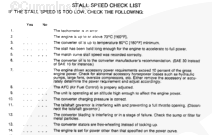
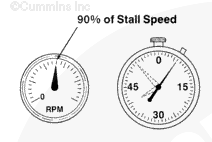
If the stall speed is too low, Check the following:
Yes
No
1.
The vehicle tachometer is in error.
2.
The engine is up to or above 70°C [160°F].
3.
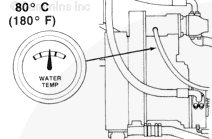
The converter oil is up to temperature 80°C [180°F]
4.
The stall has been held long enough for the engine to accelerate to full power.
5.
The match curve stall speed was recorded correctly.
6.
The converter oil is to the converter manufacturer’s recommendation (SAE 30 instead of SAE 10, for instance).
7.
The engine-driven accessory power requirements exceed 10 percent of the gross engine power. Check for abnormal accessory horsepower losses, such as hydraulic pumps, large fans, oversize compressors, and so on. Either remove the accessory or accurately determine the power requirement and adjust accordingly.
8.
The converter charging pressure is correct.
9.
The tailshaft governor is interfering with and preventing a full-throttle opening. Disconnect the tailshaft governor. Do not exceed the manufacturer’s maximum output speed.
10.
The converter blading is interfering or in a stage of failure. Check the sump or filter for particles.
11.
The converter blading is interfering, or in a stage of failure. Check the sump or filter for particles.
12.
The engine is set for power other than that specified on the power curve.
13.
The converter is wrong due to improper build or rebuild of the unit.
14.
The converter is performing to the published absorption curve.
15.
The engine and converter match is correct. Check the engine and converter models for proper match.
16.
The engine is matched to too large of a converter. If this condition is believed to exist, report the engine-converter-accessory information to the factory.
17.
The engine power is down. Refer to the Engine Power Output Low performance tree.
If the stall speed is too high, check the following:
Yes
No
1.
The accessory power requirements are less than 10 percent of the gross engine power.
2.
The converter oil is aerating or foaming. Check for low oil level, air leaks in suction line, lack of foam inhibitor in the oil, or suction screen or filter. It is accompanied by a noticeable loss of machine performance.
3.
The converter is benign held at full stall. Check for slipping front disconnect clutch or a rotating output shaft. On the converter-transmission package, this can be impossible to check.
4.
The converter turbine element is beginning to fail and lose blades, or the converter was originally built with the wrong size element.
5.
The engine and converter match is correct, due to a revision in the engine rating or the converter performance.
6.
If the oil level is too high on the transmission-converter units with the oil sump in the transmission, it can cause severe aeration due to parts dipping into the oil.
7.
The converter is performing to the published absorption curve.
8.
The converter charging pressure is correct.
The reasons for abnormal stall speeds listed above are some that have been encountered by Cummins representatives and possibly do not
include all causes. The correction of the problem is either covered in the vehicle service manual, the converter service manual, or is self-explanatory.
Hello, I'm Jack, a diesel engine fan and a blogger. I write about how to fix and improve diesel engines, from cars to trucks to generators. I also review the newest models and innovations in the diesel market. If you are interested in learning more about diesel engines, check out my blog and leave your feedback.
View all posts by Jack
 CAUTION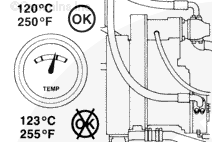




;)
;)
;)
;)
;)
;)
;)
;)
;)
;)
;)
;)
;)
;)
;)
;)
;)
;)
;)
;)
;)
;)
;)
;)
;)
;)
;)
;)