The fuel pump, high-pressure fuel lines, and fuel rail contain very high-pressure fuel. Do not loosen any fittings while the engine is running. Wait at least 10 minutes after shutting down the engine before loosening any fittings in the high-pressure fuel system to allow pressure to decrease to a lower level.
WARNING
The pressure within the fuel rail is extremely high. High-pressure can penetrate the skin. Stand clear of the engine while it is running.
WARNING
The fuel pump, high-pressure fuel lines, and fuel rail contain very high-pressure fuel. To reduce the possibility of personal injury, never loosen any fittings while the engine is running.
CAUTION
Use caution when disconnecting or removing fuel lines, replacing filters, and priming the fuel system, that fuel is not spilled or drained into the bilge area. Do not drop or throw filter elements into the bilge area. The fuel and fuel filters must be discarded in accordance with local environmental regulations.
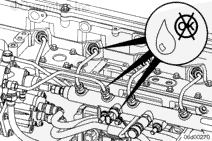
Operate the engine and check for external fuel leaks.
Check for a fuel pressure relief valve that leaks excessive fuel to drain.
The measurement of fuel pressure relief valve leakage requires use of a fuel return flow hose, Part Number 3164618. This tool is used to isolate the leakage from just the fuel pressure relief valve, so the leakage can be measured in a graduated cylinder.
NOTE: If Fault Code 449 or 2311 is active, do not replace the fuel pressure relief valve without first determining the cause of the fault condition. See the appropriate troubleshooting tree(s).
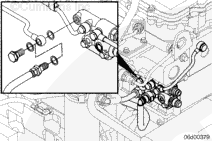
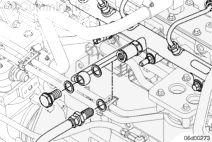
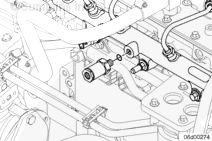
Remove the M12 banjo bolt that connects the fuel pressure relief valve drain line to the fuel drain manifold.
Install a fuel return flow hose, Part Number 3164618, at the fuel drain manifold.
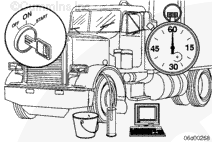
Route the fuel return flow hose into a collection device.
Fuel is at high pressure during this test. After connecting the test fitting, close the engine cover and stand clear of high-pressure fuel lines.
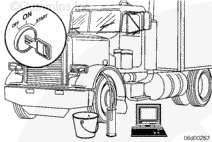
Start the engine.
NOTE: Make certain the engine is at operating temperature before running the test.
While the engine is operating at idle, use INSITE™ electronic service tool High Pressure Leak Test to create higher fuel rail pressure. INSITE™ electronic service tool will command 1500 BAR fuel rail pressure while the engine is at idle during this test.
Specification:
Less than 30 drops (1.95 ml [0.07 oz]) of fuel per 30 second are permitted to drain from the fuel pressure relief valve.
NOTE: For an accurate measurement collect three different flows and average the results.
Batteries can emit explosive gases. To reduce the possibility of personal injury, always ventilate the compartment before servicing the batteries. To reduce the possibility of arcing, remove the negative (-) battery cable first and attach the negative (-) battery cable last.
WARNING
The fuel pump, high-pressure fuel lines, and fuel rail contain very high-pressure fuel. Do not loosen any fittings while the engine is running. Wait at least 10 minutes after shutting down the engine before loosening any fittings in the high-pressure fuel system to allow pressure to decrease to a lower level.
WARNING
Fuel is flammable. Keep all cigarettes, flames, pilot lights, arcing equipment, and switches out of the work area and areas sharing ventilation to reduce the possibility of severe personal injury or death when working on the fuel system.
CAUTION
Use caution when disconnecting or removing fuel lines, replacing filters and priming the fuel system that fuel is not spilled or drained into the bilge area. Do not drop or throw filter elements into the bilge area. The fuel and fuel filters must be discarded in accordance with local environmental regulations.
Wear appropriate eye and face protection when using compressed air. Flying debris and dirt can cause personal injury.
WARNING
When using a steam cleaner, wear safety glasses or a face shield, as well as protective clothing. Hot steam can cause serious personal injury.
CAUTION
Clean all fittings before disassembly. Dirt or contaminants can damage the fuel system.
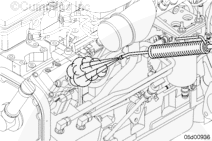
Before servicing any fuel system components, (such as fuel lines, fuel pump, injectors, etc.) which would expose the fuel system or internal engine component to potential contaminants prior to disassembly, clean the fittings, mounting hardware, and the area around the component to be removed. Dirt or contaminants can be introduced into the fuel system and engine if the surrounding areas are not cleaned, resulting in damage to the fuel system and engine.
If the fuel pressure relief valve exhibits excessive leakage to drain, it must not be reused.
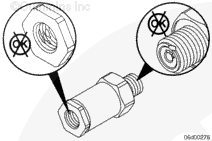
Inspect the high-pressure seal surface on the fuel pressure relief valve and in the fuel rail for damage. Do not reuse components if the high-pressure seal joint is damaged.
Batteries can emit explosive gases. To reduce the possibility of personal injury, always ventilate the compartment before servicing the batteries. To reduce the possibility of arcing, remove the negative (-) battery cable first and attach the negative (-) battery cable last.
Hello, I'm Jack, a diesel engine fan and a blogger. I write about how to fix and improve diesel engines, from cars to trucks to generators. I also review the newest models and innovations in the diesel market. If you are interested in learning more about diesel engines, check out my blog and leave your feedback.
View all posts by Jack
 WARNING
  CAUTION






;)
;)
;)
;)
;)
;)
;)
;)
;)
;)
;)
;)
;)
;)
;)
;)
;)
;)
