Zinc anode plugs expand and can break off during removal. Inspect the zinc anode plug to make sure it is in one piece. If not, it must be replaced with a new zinc anode plug, and the broken pieces must be retrieved from the aftercooler to prevent damage to components downstream in the sea water system.
CAUTION
In some cases, it will be necessary to hold the welded fitting on the heat exchanger with an additional wrench to prevent damage to the heat exchanger.
The QSC8.3 marine engine has two zinc anode plugs in the heat exchanger and two in the aftercooler. The QSL9 sea water cooled engine (heat exchanger)
has one zinc anode plug in the heat exchanger and two in the aftercooler.
The QSL9 keel cooled marine engine does not use zinc anode plugs.
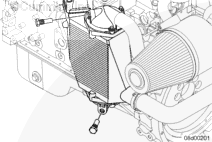
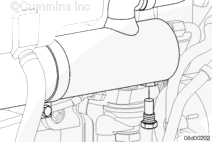
Shut off the sea water supply valve(s) and remove the zinc anode plugs from the bottom and top of the aftercooler assembly.
Inspect the sacrificial zinc anode plug and replace as required.
Place the zinc portion of the plug on a metal surface and strike the plug with a small hammer to remove loose material. This will help to determine the actual amount of material remaining.
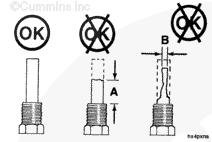
Check the length of all the zinc anode plugs in the heat exchanger and aftercooler, and replace them if they are 50 percent eroded. Frequency of replacement depends upon the chemical reaction of raw water circulated through the heat exchanger and aftercooler.
Zinc anode Plug Erosion Limits
mm
in
A
19.0
MIN
0.750
New
51.0
MAX
2.000
B
6.4
MIN
0.250
New
16.0
MAX
0.630
If any zinc anode plug does not meet specification, replace it with a new zinc anode plug.
Do not use thread sealant or Teflon™ tape on the zinc anodes. The use of any type of thread sealant will insulate the zinc anode and prevent a good ground.
Install the zinc anode plugs in the aftercooler assembly.
Hello, I'm Jack, a diesel engine fan and a blogger. I write about how to fix and improve diesel engines, from cars to trucks to generators. I also review the newest models and innovations in the diesel market. If you are interested in learning more about diesel engines, check out my blog and leave your feedback.
View all posts by Jack
 CAUTION



;)
;)
;)
;)
;)
;)
