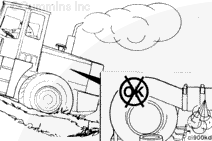
Engine intake air must be filtered to prevent dirt and debris from entering the engine. If intake air piping is damaged or loose, unfiltered air will enter the engine and cause premature wear.
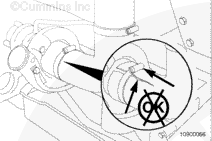
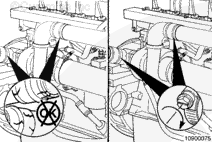
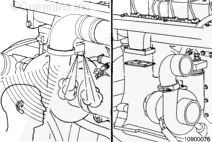
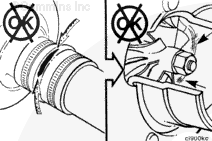
Inspect the intake air piping for cracked hoses, damage, or loose clamps.
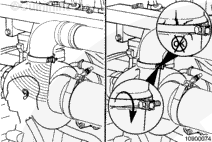
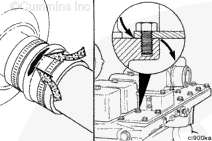
Replace damaged pipes, and tighten loose clamps, as necessary, to make sure the air intake system does not leak.
Torque Value: 8 n.m [71 in-lb]
Check for corrosion of the intake system piping under the clamps and hoses. Corrosion can allow corrosive products and dirt to enter the intake system. Disassemble and clean, as required.
Loose connections or cracks in the suction side of the intake pipe and after the air filter can allow debris to be ingested by the engine, causing rapid wear in the cylinders.
Leaks at the intake manifold, unsealed bolt holes, or manifold cover gasket can also allow dust and dirt to be ingested into naturally aspirated engines.
Debris drawn into the air suction side can damage the compressor blades, causing an imbalance resulting in bearing failure.
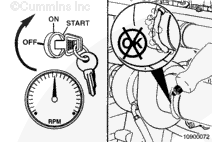
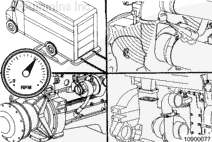
To verify a bearing failure or damaged compressor, remove the intake and exhaust piping, and check for contact. The rotor assembly must rotate freely and should not be damaged. Measurement of axial and radial clearance is described in this section.
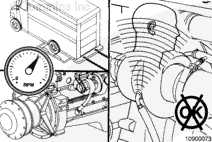
Excessive smoke and low power from a turbocharged engine can be caused by pressurized air leaking from loose connections or cracks in the crossover tube or intake manifold. This can also cause a noise problem.
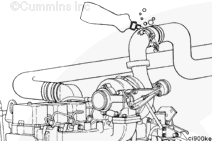
In addition to the inspection for cracks and loose fittings, liquid soap can be applied to the charge air cooler, connections, and the manifold cover sealing surfaces to find the leaks. The leaks will create bubbles that are easier to detect. Measurement of manifold pressure is described in this section.
Hello, I'm Jack, a diesel engine fan and a blogger. I write about how to fix and improve diesel engines, from cars to trucks to generators. I also review the newest models and innovations in the diesel market. If you are interested in learning more about diesel engines, check out my blog and leave your feedback.
View all posts by Jack

 CAUTION



;)
;)
;)
;)
;)
;)
;)
;)
;)
;)
;)
;)
;)
;)
;)
;)
;)
;)
;)
;)
;)
;)