Wear appropriate eye and face protection when using compressed air. Flying debris and dirt can cause bodily injury.
NOTE: The illustrations shown will be of the SS model single cylinder air compressor. Differences in procedures for SS, QE and ST model Holset® air compressors will be shown where necessary.
Shut the engine off.
Open the petcock on the wet tank to release the compressed air from the system.
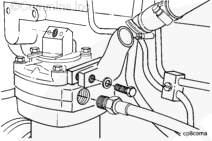
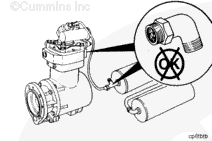
The air discharge line must be capable of withstanding extreme heat and pressure to prevent the possibility of personal injury and property damage. Refer to the OEM service manual.
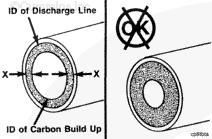
NOTE: If the total carbon buildup thickness exceeds specification, remove and clean, or replace the air discharge line. Refer to the OEM serivce manual for the manufacturer’s specifications.
The air discharge line must be capable of withstanding extreme heat and pressure to prevent personal injury and property damage. Refer to the manufacturer’s specifications.
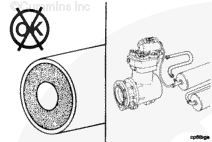
Continue to check for carbon buildup in the air discharge line connections up to the first connection, or wet tank.
Clean or replace any lines and fittings with carbon buildup greater than 1.6 mm [0.06 (1/16)-inch]. Refer to the OEM service manual for manufacturer’s specifications for cleaning or replacement instructions.
Hello, I'm Jack, a diesel engine fan and a blogger. I write about how to fix and improve diesel engines, from cars to trucks to generators. I also review the newest models and innovations in the diesel market. If you are interested in learning more about diesel engines, check out my blog and leave your feedback.
View all posts by Jack
 WARNING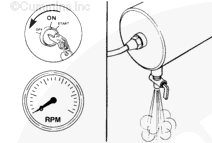




;)
;)
;)
;)
;)
;)
;)
;)
;)
;)
