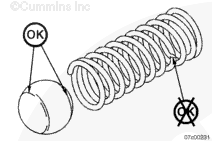
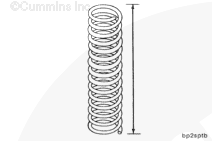
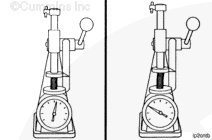
The high-pressure relief valve (1) is held in the closed position by spring force (2). The valve remains in the closed position until the oil pressure exceeds 1034 kPa [150 psi] in the lubricating oil pump.
When the oil pressure exceeds 1034 kPa [150 psi] in the lubricating oil pump, for instance, during cold start-up, the oil pressure in the pump overcomes the relief valve spring force.
This allows the excess oil to return to the oil pan, preventing possible damage to the lubricating system components.
To reduce the possibility of personal injury, avoid direct contact of hot oil with your skin.
WARNING
Some state and federal agencies have determined that used engine oil can be carcinogenic and cause reproductive toxicity. Avoid inhalation of vapors, ingestion, and prolonged contact with used engine oil. If not reused, dispose of in accordance with local environmental regulations.
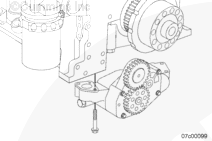
Remove and disassemble the lubricating oil pump. Refer to Procedure 007-031.
Hello, I'm Jack, a diesel engine fan and a blogger. I write about how to fix and improve diesel engines, from cars to trucks to generators. I also review the newest models and innovations in the diesel market. If you are interested in learning more about diesel engines, check out my blog and leave your feedback.
View all posts by Jack

 WARNING





;)
;)
;)
;)
;)
;)
;)
;)
;)
;)
;)
;)
