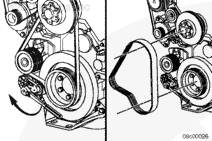
The belt tensioner is spring-loaded and must be pivoted away from the drive belt. Pivoting in the wrong direction can result in damage to the belt tensioner.
Using a 1/2-inch square drive, lift the tensioner to relieve tension in the belt and remove the belt.
The belt tensioner is spring-loaded and must be pivoted away from the drive belt. Pivoting in the wrong direction can result in damage to the belt tensioner.
Using a 1/2-inch square drive lift and hold the belt tensioner. Install the drive belt and release the tensioner.
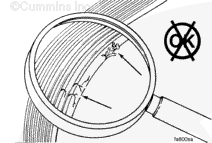
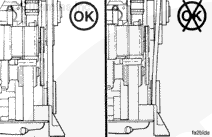
Belt drive systems equipped with an automatic belt tensioner can not be adjusted. A belt tension gauge will not give an accurate measure of the belt tension. The automatic belt tensioner is designed to maintain proper belt tension over the life of the belt. Only
inspection of the tensioner is required.
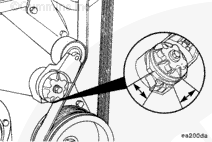
The belt tensioner is designed to operate within the limit of arm movement provided by the cast stops when the belt length and geometry are correct.
If the tensioner is hitting either of the limits during operation, check the mounting brackets and the belt length. Loose brackets, bracket failure, alternator movement, incorrect belt length, or belt failure can cause the tensioner to hit the limits.
Hello, I'm Jack, a diesel engine fan and a blogger. I write about how to fix and improve diesel engines, from cars to trucks to generators. I also review the newest models and innovations in the diesel market. If you are interested in learning more about diesel engines, check out my blog and leave your feedback.
View all posts by Jack
 CAUTION






;)
;)
;)
;)
;)
;)
;)
;)
;)
;)