Do not exceed governed engine speed when operating engine brakes. Engine damage can occur. The engine brakes are designed to assist the vehicle’s service brakes in slowing down the vehicle. Never use only the engine brakes to stop the vehicle. If other engine brakes are used, refer to the component manufacturer’s manual.
Signature and ISX engines are equipped with the Intebrake™ system (engine brakes). The Intebrake™ system is optional on QSX engines.
Engine brakes use the energy of engine compression to provide vehicle retardation by converting the engine to an energy-absorbing device to reduce vehicle speed. This is accomplished by a hydraulic circuit that opens the exhaust valves near the end of the compression stroke.
Engine brakes provide the maximum retarding power at rated speed; therefore, gear selection is important.
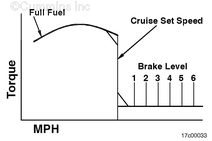
The amount of braking power available on Signature, ISX, or QSX engines is up to 600 hp. Braking power is managed by the Intebrake™ system (engine brakes).
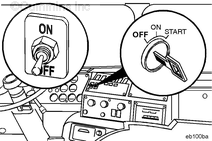
The six-position selector switch is located next to the on/off switch in the cab, and allows you to select the retarding power from brake positions 1 to 6.
Signals from the on/off switch, the clutch switch, the throttle sensor, and the cruise/PTO switches are fed into the electronic control module (ECM).
NOTE: Any one of these switches can deactivate the engine brakes. If the engine brakes in cruise control feature is turned on, the cruise control/PTO switches will not deactivate the engine brakes.
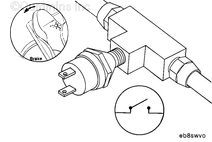
The “clutch switch” uses the motion of the clutch linkage to deactivate the engine brakes when the clutch pedal is depressed. Depressing the clutch while in cruise control will disengage the cruise control.
Idle the engine 3 to 5 minutes at approximately 1000 rpm to warm the engine before activating the engine brakes. Do not operate the engine brakes until the engine oil temperature is above 30°C [86°F].
Do not use the engine brakes while bobtailing or pulling an empty trailer. With the engine brakes in operation, wheel lockup can occur more quickly when the service brakes are applied, especially on vehicles with single-drive axles.
Make sure the engine brakes are switched to the OFF position when bobtailing or pulling an empty trailer.
Hello, I'm Jack, a diesel engine fan and a blogger. I write about how to fix and improve diesel engines, from cars to trucks to generators. I also review the newest models and innovations in the diesel market. If you are interested in learning more about diesel engines, check out my blog and leave your feedback.
View all posts by Jack
 CAUTION






 WARNING


;)
;)
;)
;)
;)
;)
;)
;)
;)
;)
;)
;)
;)
;)
;)
;)
;)
;)
;)
;)
;)
;)
;)
;)
;)
;)
;)
;)
;)
;)
;)
;)
;)
;)
;)
;)
