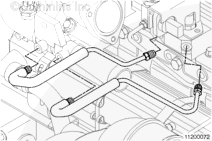
Loosen the EGR differential pressure sensor adapter mounting capscrews, but do not remove. This is so the tubes are not distorted during installation.
Make sure not to cross-connect tubes or a fault code will result.
Apply a light lubricant (CRC 3-36, WD-40, or equivalent) to the tube threads and install the tubes. The lubricant must be applied inside the tube nut, directing the spray on the threads and around the sleeve and flange area.
Tighten the tube nuts.
Torque Value: 16 n.m [142 in-lb]
Position the insulation on the differential pressure sensor tubes so the tube nuts at the venturi connection are covered.
The insulation on the pressure tubes is designed to only cover the bottom portion of the tube which threads into the EGR transfer tube. This location proves to be most effective and prevents heat soaking of the EGR differential pressure sensor.
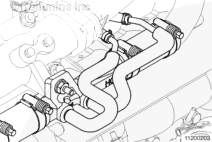
Make sure not to cross-connect tubes or a fault code will result.
Apply a light lubricant (CRC 3-36, WD-40, or equivalent) to the tube threads and install the tubes. The lubricant must be applied inside the tube nut, directing the spray on the threads and around the sleeve and flange area
Tighten the tube nuts at the venturi connections.
Torque Value: 26 n.m [230 in-lb]
Tighten the hose clamps at the differential pressure sensor adapter.
Position the insulation on the differential pressure sensor tubes so that the tube nuts at the venturi connection are covered.
The insulation on the pressure tubes is designed to cover only the bottom portion of the tube which threads into the EGR transfer tube. This is the most effective location and reduces the possibility of heat soaking of the EGR differential pressure sensor.
Hello, I'm Jack, a diesel engine fan and a blogger. I write about how to fix and improve diesel engines, from cars to trucks to generators. I also review the newest models and innovations in the diesel market. If you are interested in learning more about diesel engines, check out my blog and leave your feedback.
View all posts by Jack



;)
;)
;)
;)