Fuel is flammable. Keep all cigarettes, flames, pilot lights, arcing equipment, and switches out of the work area and areas sharing ventilation to reduce the possibility of severe personal injury or death when working on the fuel system.
WARNING
Drain the fuel into a container, and dispose of contents in accordance with local environmental regulations.
WARNING
Be sure that the fuel inlet and return valves are returned to the open position before cranking engine. Engine damage can result if valves are in the wrong position when the engine is cranked or started. Environmental damage can also occur. Refer to Procedure 006-999 in Familiarization section for further information.
Fuel is flammable. Keep all cigarettes, flames, pilot lights, arcing equipment, and switches out of the work area and areas sharing ventilation to reduce the possibility of severe personal injury or death when working on the fuel system.
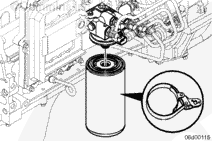
Loosen and remove the fuel filter.
Make sure the seal ring does not stick to the fuel filter head.
Remove the ring with an o-ring pick, if necessary.
The fuel pump high-pressure fuel lines and fuel rail contain very high-pressure fuel. Never loosen any fittings while the engine is running. Personal injury and property damage can result.
WARNING
Be sure that the fuel inlet and return valves are returned to the open position before cranking engine. Engine damage can result if valves are in the wrong position when the engine is cranked or started. Environmental damage can also occur. Refer to Procedure 006-999 in Familiarization section for further information.
CAUTION
Use caution when disconnecting or removing fuel lines, replacing filters and priming the fuel system that fuel is not spilled or drained into the bilge area. Do not drop or throw filter elements into the bilge area. The fuel and fuel filters must be discarded in accordance with local environmental regulations.
The fuel pump high-pressure fuel lines and fuel rail contain very high-pressure fuel. Never loosen any fittings while the engine is running. Personal injury and property damage can result.
WARNING
Be sure that the fuel inlet and return valves are returned to the open position before cranking engine. Engine damage can result if valves are in the wrong position when the engine is cranked or started. Environmental damage can also occur. Refer to Procedure 006-999 in Familiarization section for further information.
CAUTION
Use caution when disconnecting or removing fuel lines, replacing filters and priming the fuel system that fuel is not spilled or drained into the bilge area. Do not drop or throw filter elements into the bilge area. The fuel and fuel filters must be discarded in accordance with local environmental regulations.
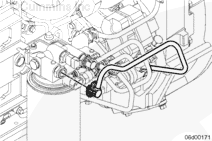
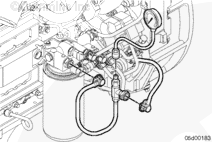
Unlock the manual priming pump handle by turning counterclockwise. Pump the primer handle until resistance is felt (approximately 140-150 strokes). Lock the manual priming pump handle and crank the engine. Start should occur within 5 seconds.
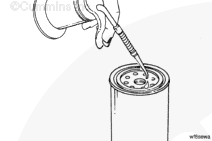
NOTE: Do not fill new filters with fuel prior to assembly as this will allow unfiltered fuel to enter the system and may cause damage to fuel system components.
Unlock the manual priming pump handle by turning counterclockwise. Pump the primer handle 60 times. Lock manual priming pump handle and crank the engine. Start should occur within approximately 20 seconds.
NOTE: Do not exceed starter cranking limitations.
After Running the Vehicle Tank Dry:
Be sure there is fuel in the vehicle fuel tank. Unlock the manual priming pump handle by turning it counterclockwise. Pump the primer until resistance is felt (50-60) strokes. Lock manual priming pump handle and crank the engine. Start should occur within 5 seconds.
NOTE: Do not remove and fill filters with fuel prior to priming the system in an attempt to reduce priming time as this will allow unfiltered fuel to enter the system and may cause damage to fuel system components.
Hello, I'm Jack, a diesel engine fan and a blogger. I write about how to fix and improve diesel engines, from cars to trucks to generators. I also review the newest models and innovations in the diesel market. If you are interested in learning more about diesel engines, check out my blog and leave your feedback.
View all posts by Jack
 WARNING







 CAUTION

;)
;)
;)
;)
;)
;)
;)
;)
;)
;)
;)
;)
;)
;)
;)
;)
;)
;)
;)
;)
;)
;)