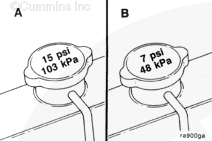
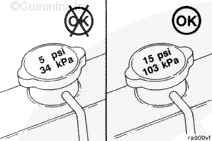
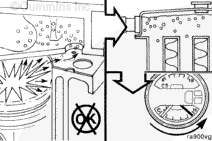
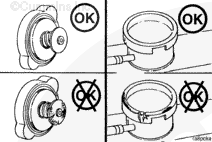
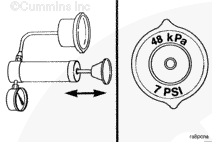
Air in the coolant can result in loss of coolant from the overflow when the aerated coolant is hot. The heated air expands, increasing the pressure in the system, causing the cap to open.
Similarly, coolant can be displaced through the overflow if the head gasket leaks compression gases to the coolant system.
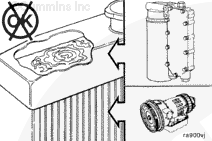
The operating pressure of the cooling system and the lubricating system can result in the mixing of the fluids if there is a leak between the systems such as the head gasket or oil cooler. Refer to Section 7, Lubricating Oil System.
NOTE: Transmission fluid can also leak into the coolant through radiator bottom tank transmission oil coolers.
Hello, I'm Jack, a diesel engine fan and a blogger. I write about how to fix and improve diesel engines, from cars to trucks to generators. I also review the newest models and innovations in the diesel market. If you are interested in learning more about diesel engines, check out my blog and leave your feedback.
View all posts by Jack



;)
;)
;)
;)
;)
;)
;)
;)
;)
;)
;)
;)
