On all applications except marine, the water pump pulls coolant from the bottom of the radiator and pumps it through the engine and back to the top of the radiator for cooling. Reduced or interrupted flow will result in the engine operating hot.
On marine applications, the water pump pulls water through a coolant return line from the heat exchanger, if equipped, and exhaust manifold. A makeup line from an expansion tank is also plumbed into the coolant return line.
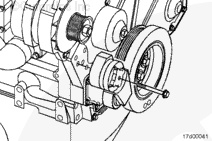
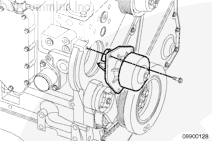
The pump is belt-driven from the crankshaft pulley. An automatic belt tensioner is used to prevent the belt from slipping on the pump pulley. A malfunction of the tensioner will cause the water pump impeller to rotate at a slower speed, reducing the amount of coolant flow.
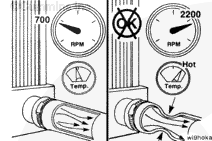
The coolant flow can also be reduced if the inlet hose to the water pump collapses. A hose will usually not collapse while the engine is running at low speed. Check the hose while the engine is operating at rated speed.
NOTE: Be sure the engine is warm, a minimum of 91°C [195°F], so the thermostat is open.
A worn or malfunctioning water pump will not produce the flow required to prevent the engine from running hot. However, be sure to check the other possibilities indicated in the Coolant Temperature above Normal symptom chart in Section TS before checking the flow or replacing the pump.
Batteries can emit explosive gases. To reduce the possibility of personal injury, always ventilate the compartment before servicing the batteries. To reduce the possibility of arcing, remove the negative (-) battery cable first and attach the negative (-) battery cable last.
WARNING
Do not remove the pressure cap from a hot engine. Wait until the coolant temperature is below 50°C [120°F] before removing the pressure cap. Heated coolant spray or steam can cause personal injury.
WARNING
Coolant is toxic. Keep away from children and pets. If not reused, dispose of in accordance with local environmental regulations.
CAUTION
Use caution when draining coolant that coolant is not spilled or drained into the bilge area. Do not pump the coolant overboard. If the coolant is not reused, it must be discarded in accordance with local environmental regulations.
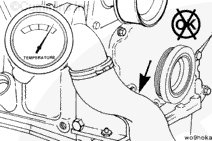
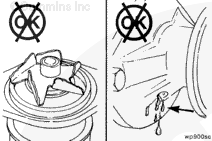
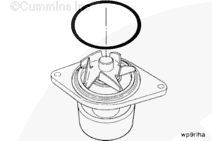
Inspect the water pump housing and impeller for cracks or damage.
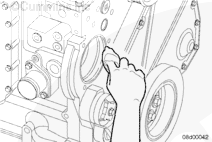
Inspect the water pump weep hole for an indication of a steady leak.
NOTE: A streak or chemical buildup at the weep hole is not justification for water pump replacement. If a steady flow of coolant or oil is observed, replace the water pump with a new or rebuilt unit.
Hello, I'm Jack, a diesel engine fan and a blogger. I write about how to fix and improve diesel engines, from cars to trucks to generators. I also review the newest models and innovations in the diesel market. If you are interested in learning more about diesel engines, check out my blog and leave your feedback.
View all posts by Jack


 WARNING
  CAUTION



;)
;)
;)
;)
;)
;)
;)
;)
;)
;)
;)
;)
;)
;)
;)
;)
