 |
|
Turbocharger Turbine Inlet Temperature (Calculated) – Data Valid but Above Normal Operational Range – Moderately Severe Level
|

Overview
| CODE | REASON | EFFECT |
| Fault Code: 2451 PID: SPN: 2789 FMI: 0/16 LAMP: None SRT: |
Turbocharger Turbine Inlet Temperature (Calculated) – Data Valid but Above Normal Operational Range – Moderately Severe Level. Turbocharger turbine inlet temperature has exceeded the engine protection limit. |
Fuel is limited in an attempt to decrease the calculated exhaust gas temperature entering the turbocharger. |
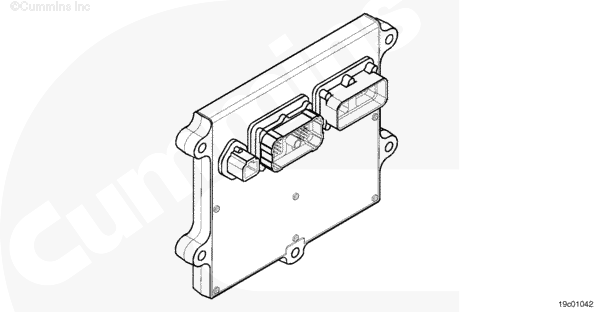 ISB, ISC, and ISL – Electronic Control Module
|
Circuit Description
The exhaust gas temperature is calculated by the electronic control module (ECM). Exhaust gas temperature is derived by the ECM, based on engine operating conditions such as intake manifold air temperature, engine speed, injection timing, intake manifold pressure, and fuel flow.
Component Location
There is not a physical exhaust gas temperature sensor in the system. The exhaust gas temperature is a calculation of exhaust gas temperature before the turbocharger and is also known as turbine inlet temperature.
Note: Some original equipment manufacturers (OEMs) have pyrometer gauges mounted in their chassis. Pyrometers measure turbine outlet temperature or the exhaust gas leaving the turbocharger and will not equal the value monitored with the exhaust gas temperature parameter in INSITE™ electronic service tool.
Conditions for Running the Diagnostics
This diagnostic runs continuously when the engine is running.
Conditions for Setting the Fault Codes
The ECM detects that the calculated turbine inlet temperature is greater than a calibratible value.
Action Taken When the Fault Code is Active
- The ECM logs the fault code immediately when the temperature threshold is exceeded.
- Fuel is limited in an attempt to decrease the exhaust gas temperature entering the turbocharger.
Conditions for Clearing the Fault Code
The ECM will turn off the amber CHECK ENGINE light immediately after the diagnostic runs and passes.
Shop Talk
Verify the electronic control module (ECM) calibration is correct. Check the calibration revision history found on QuickServe™ Online for applicable fixes to the calibration stored in the ECM. If necessary, calibrate the ECM. Refer to Procedure 019-032 in Section 19.
The most common cause of this fault code is low boost pressure. Low boost pressure can be caused by several factors; leaking charge air cooler, damaged charge air cooler piping or hose, loose charge air cooler clamps, damaged intake manifold pressure sensor, damaged variable geometry turbocharger, damaged turbocharger control valve, or damaged turbocharger control shutoff valve.
This fault code can also be caused by a turbocharger fuel control derate which can be viewed in INSITE™ electronic service tool under the Engine Operating State. Turbocharger fuel control derates can be caused by several factors: high exhaust temperatures, high turbocharger compressor inlet temperatures, and high turbocharger compressor outlet temperatures.
Exhaust gas recirculation (EGR) system leaks can also cause this fault code. Inspect the EGR bellows and EGR connections for signs of leaks.
Note: This fault code will most likely not be active with no load in the shop. The engine must be loaded to trip this fault code and to determine if the malfunction has been found and fixed. Running units on the dynamometer can sometimes cause this fault code to log due to the stationary nature and high temperatures.
Refer to Troubleshooting Fault Code t05-2451

;)
;)