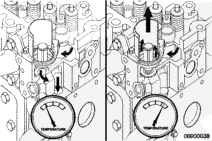
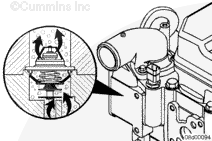
The thermostat controls the engine coolant temperature. When the coolant temperature is below the operating range, engine coolant is bypassed back to the inlet of the water pump. When the engine coolant temperature reaches the operating range, the thermostat opens, sealing off the bypass, forcing engine coolant to flow to the radiator or heat exchanger.
An incorrect or malfunctioning thermostat can cause the engine to run too hot or too cold.
Never operate the engine without a thermostat. Without a thermostat, the path of least resistance for the coolant is through the bypass to the water pump inlet. This can cause the engine to overheat.
A missing check ball can cause the engine to run cold, resulting in engine damage.
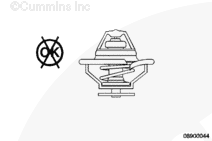
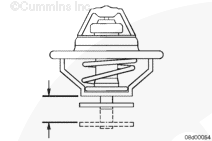
The thermostat contains two check balls to vent air past the thermostat when it is closed. This is needed for the cooling system to fill.
NOTE: Some off-highway applications use a thermostat with one check ball. When servicing a thermostat always be sure to replace with the same part number. Though an incorrect thermostat will physically fit, it will lead to improper engine operation.
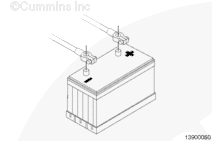
Batteries can emit explosive gases. To reduce the possibility of personal injury, always ventilate the compartment before servicing the batteries. To reduce the possibility of arcing, remove the negative (-) battery cable first and attach the negative (-) battery cable last.
Coolant is toxic. Keep away from children and pets. If not reused, dispose of in accordance with local environmental regulations.
WARNING
Do not remove the pressure cap from a hot engine. Wait until the coolant temperature is below 50°C [120°F] before removing the pressure cap. Heated coolant spray or steam can cause personal injury.
CAUTION
Use caution when draining coolant that coolant is not spilled or drained into the bilge area. Do not pump the coolant overboard. If the coolant is not reused, it must be discarded in accordance with local environmental regulations.
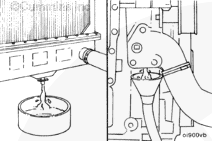
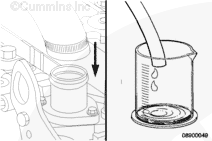
Drain the coolant below the level of the thermostat. Refer to Procedure 008-018.
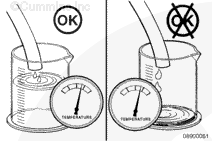
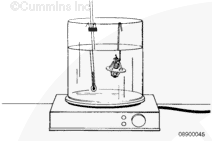
The engine thermostat must operate properly for the engine to operate in the most efficient heat range. Overheating or overcooling will shorten engine life.
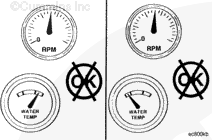
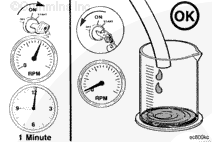
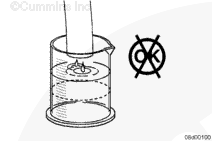
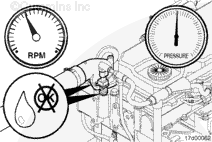
Complete this test with the engine coolant temperature below 50°C [122°F]. Hot steam can cause serious personal injury.
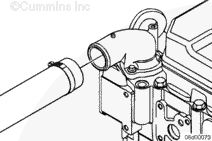
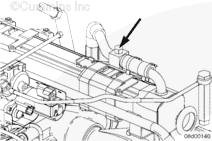
Loosen radiator hose clamp.
Remove the radiator hose from the water outlet connection. Refer to Procedure 008-045.
Marine applications, remove the heat exchanger hose from the water outlet connection and plug the heat exchanger engine coolant inlet connection. Refer to Procedure 008-053.
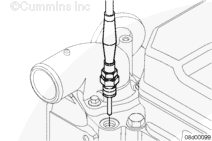
Use an electronic service tool to monitor the coolant temperature; or install a thermocouple or temperature gauge, which is known to be accurate, in the water header plate on the engine side of the water outlet connection.
Marine applications, use the service tool to monitor engine temperature.
Always use the correct thermostat and do not operate the engine without a thermostat installed. The engine can overheat if operated without a thermostat because the path of least resistance for the coolant is through the bypass to the pump inlet. An incorrect thermostat can cause the engine to overheat or run too cold.
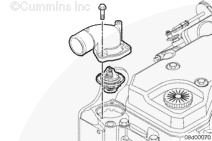
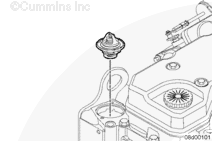
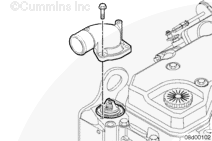
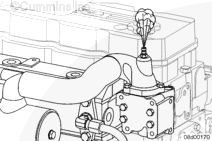
Install the thermostat into the thermostat housing.
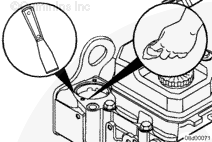
NOTE: Make sure a new thermostat seal is installed on the outer lip of the thermostat flange every time the thermostat is reinstalled.
Batteries can emit explosive gases. To reduce the possibility of personal injury, always ventilate the compartment before servicing the batteries. To reduce the possibility of arcing, remove the negative (-) battery cable first and attach the negative (-) battery cable last.
Hello, I'm Jack, a diesel engine fan and a blogger. I write about how to fix and improve diesel engines, from cars to trucks to generators. I also review the newest models and innovations in the diesel market. If you are interested in learning more about diesel engines, check out my blog and leave your feedback.
View all posts by Jack
 CAUTION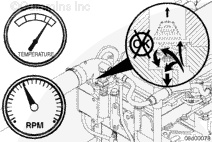
 WARNING







;)
;)
;)
;)
;)
;)
;)
;)
;)
;)
;)
;)
;)
;)
;)
;)
;)
;)
;)
;)
;)
;)
;)
;)
;)
;)
;)
;)
;)
;)
;)
;)
;)
;)
;)
;)
;)
;)
;)
;)
;)
;)
;)
;)
;)
;)