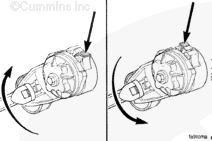
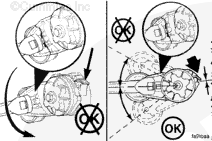
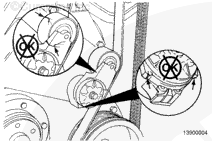
The belt tensioner is spring-loaded and must be pivoted away from the drive belt. Pivoting in the wrong direction can result in damage to the belt tensioner.
Pivot the tensioner to relieve tension in the belt, and remove the belt.
NOTE: The belt tensioner winds in the direction that the spring tang is bent over the tensioner body. To loosen the tension on the belt, rotate the tensioner to wind the spring tighter.
Applying excessive force in the opposite direction of windup or after the tensioner has been wound up to the positive stop can cause the tensioner arm to crack or break.
The belt tensioner is spring-loaded and must be pivoted away from the drive belt. Pivoting in the wrong direction can result in damage to the belt tensioner.
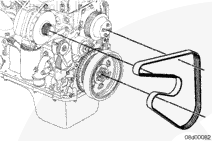
Route the drive belt on the engine, except for the water pump pulley.
Pivot the tensioner and install the drive belt, slipping the belt over the water pump pulley last.
Release the tensioner to apply tension to the drive belt.
Check the alignment of the belt with the tensioner and the rest of the front end auxiliary drive.
Operate the engine and check for belt squeal. Excessive belt squeal indicates belt slippage.
Hello, I'm Jack, a diesel engine fan and a blogger. I write about how to fix and improve diesel engines, from cars to trucks to generators. I also review the newest models and innovations in the diesel market. If you are interested in learning more about diesel engines, check out my blog and leave your feedback.
View all posts by Jack
 CAUTION




;)
;)
;)
;)
;)
;)
;)
;)
;)
;)
;)
;)