NOTE: All fuel system diagnostic procedures and component specifications have been moved to Procedure 005-236 (Fuel System Diagnostics).
A malfunctioning electric fuel lift pump can cause slow engine starts or can result in an engine failing to start. The fuel lift pump can be cleaned and repaired to a limited extent.
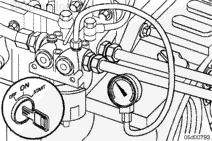
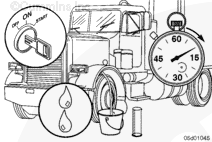
The lift pump will operate for 30 to 60 seconds when the key is switched ON. The lift pump will also operate while the engine is cranking.
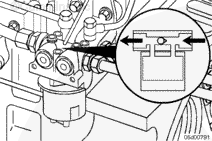
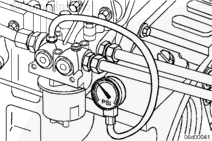
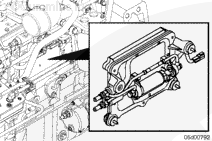
The lift pump is contained in an assembly that includes fuel supply and drain manifolds. These manifolds provide for OEM connection of fuel supply and return hoses. The fuel supply manifold also contains M10 STORM fittings which allow for pressure and vacuum measurement of the fuel supply at the electric lift pump.
A bypass check valve in the fuel supply manifold makes sure the system is primed by the lift pump. This check valve opens under vacuum created by the fuel injection pump, once the engine is started. High vacuum measured between the electric lift pump and the fuel filter can indicate this check valve has become plugged.
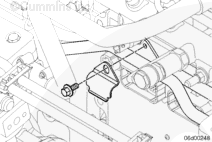
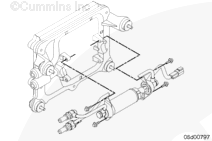
A lift pump is mounted to the back of the ECM cooling plate.
A bypass check valve in the ECM cooling plate makes sure the system is primed by the lift pump. This check valve opens under vacuum created by the gear pump, once the engine is started. High vacuum measured between the electric lift pump and the gear pump can indicate this check valve has become plugged.
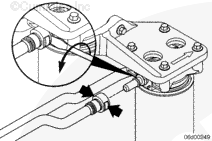
The ECM cooling plate check valve is integral with the lower (outlet) fitting of the ECM cooling plate.
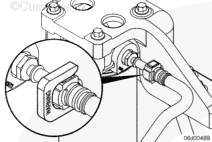
Disconnect the quick disconnect style fuel line from the gear pump inlet by pressing in the locking tangs on both sides of the quick disconnect fitting.
To aid in the removal of quick disconnect style fuel lines, slide removal tools, Part Number 4918878, over the locking tangs. Make sure the tool is removed from the fuel line as soon as possible after the line has been disconnected.
Inadvertently leaving the tool in place can result in fuel leaks.
To aid in removal, a screwdriver may be inserted between the fuel line end and quick disconnect male union. After pressing the opposing locking tangs, twisting the flat blade of the screwdriver helps to remove the fuel line.
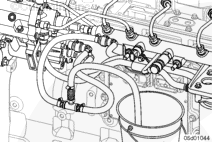
Install diagnostic fuel line, Part Number 4918895, between the gear pump fuel supply line and the gear pump innlet.
Connect orifice diagnostic fuel line, Part Number 3164621, to the Compuchek™ fitting on the diagnostic fuel line, Part Number 4918895, and run hose into a collection device.
NOTE: At initial key-on, the lift pump will run for 30 seconds and then stop.
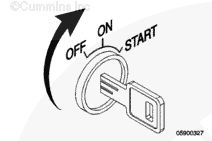
Turn key switch to the “On” position and allow fuel to flow into a collection device for 10 seconds (or until fuel stream is continuous.)
NOTE: It may take longer than 10 seconds for fuel stream to flow continuously during the first key-on cycle due to air in the diagnostic fuel lines.
Once fuel flow is continuous, transfer the orifice diagnostic fuel line to a clear graduated cylinder and allow fuel to flow into the graduated cylinder for 10 seconds.
Remove the orifice diagnostic fuel line from graduated cylinder after 10 seconds and turn key switch to the “Off” position.
Record the volume of fuel collected over 10 seconds.
Repeat this test 3 times and take an average of the flow rates.
Measurements
ml
fl-oz
Minimum volume of fuel during 10 second fuel lift pump flow test
100
3.4
NOTE: If the lift pump flow is low while the lift pump runs, make sure the ECM cooling plate check valve is not blocked open. Also, make sure the OEM connection inlet restriction is within specification.
NOTE: If the lift pump flow is low while the lift pump runs, make sure fuel is primed. For example, following fuel filter replacement; it is necessary to cycle the fuel lift pump three or four times before the air is purged.
Batteries can emit explosive gases. To reduce the possibility of personal injury, always ventilate the compartment before servicing the batteries. To reduce the possibility of arcing, remove the negative (-) battery cable first and attach the negative (-) battery cable last.
Thoroughly clean the fittings and components before removal. Make sure that debris, water, steam, or cleaning solution do not get inside the fuel system.
Batteries can emit explosive gases. To reduce the possibility of personal injury, always ventilate the compartment before servicing the batteries. To reduce the possibility of arcing, remove the negative (-) battery cable first and attach the negative (-) battery cable last.
CAUTION
Use caution when disconnecting or removing fuel lines, replacing filters and priming the fuel system that fuel is not spilled or drained into the bilge area. Do not drop or throw filter elements into the bilge area. The fuel and fuel filters must be discarded in accordance with local environmental regulations.
Disconnect the electric fuel priming pump from the engine wiring harness.
Shut off the fuel supply valve. Refer to the OEM service manual.
NOTE: Thoroughly clean fittings and components before removal. Make sure that debris, water, steam or cleaning solution do not get inside the fuel system.
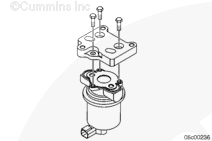
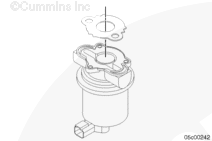
The lift pump contains loose parts and is sensitive to debris. Use care when removing the lift pump body from the adapter to make sure the parts are intact and the pump is not exposed to any debris. Failing to do so can cause the pump to malfunction or have premature wear.
Remove the three capscrews at the top of the lift pump adapter.
Batteries can emit explosive gases. To reduce the possibility of personal injury, always ventilate the compartment before servicing the batteries. To reduce the possibility of arcing, remove the negative (-) battery cable first and attach the negative (-) battery cable last.
Batteries can emit explosive gases. To reduce the possibility of personal injury, always ventilate the compartment before servicing the batteries. To reduce the possibility of arcing, remove the negative (-) battery cable first and attach the negative (-) battery cable last.
Hello, I'm Jack, a diesel engine fan and a blogger. I write about how to fix and improve diesel engines, from cars to trucks to generators. I also review the newest models and innovations in the diesel market. If you are interested in learning more about diesel engines, check out my blog and leave your feedback.
View all posts by Jack





 WARNING
 CAUTION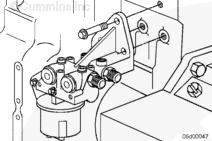


;)
;)
;)
;)
;)
;)
;)
;)
;)
;)
;)
;)
;)
;)
;)
;)
;)
;)
;)
;)
;)
;)
;)
;)
;)
;)
;)
;)
;)
;)