The exhaust and exhaust components can remain hot after the vehicle stopped moving. To reduce the risk of fire, property damage, burns or other serious personal injury, allow the exhaust system to cool before beginning this procedure or repair and make sure that no combustible materials are located where they are likely to come in contact with hot exhaust or exhaust components.
WARNING
The catalyst substrate contains Vanadium Pentoxide. Vanadium Pentoxide has been determined by the State of California to cause cancer. Always wear protective gloves, dust mask and eye protection when handling the catalyst assembly. Do not get the catalyst material in your eyes. In case of contact, immediately flood eyes with large amounts of water for a minimum of 15 minutes. Avoid prolonged contact with skin. In case of contact, immediately wash skin with soap and water. Refer to the Materials Safety Data Sheet (MSDS) for additional information.
WARNING
The catalyst substrate contains Vanadium Pentoxide. Vanadium Pentoxide has been determined by the State of California to cause cancer. In the event the catalyst is being replaced, dispose of in accordance with local regulations. Do not cut open the exhaust catalyst assembly.
WARNING
This assembly weighs 23 kg [50 lb] or more. To reduce the possibility of personal injury, use a hoist or get assistance to lift this assembly.
The exhaust and exhaust components can remain hot after the vehicle stopped moving. To reduce the risk of fire, property damage, burns or other serious personal injury, allow the exhaust system to cool before beginning this procedure or repair and make sure that no combustible materials are located where they are likely to come in contact with hot exhaust or exhaust components.
The exhaust and exhaust components can remain hot after the vehicle stopped moving. To reduce the risk of fire, property damage, burns or other serious personal injury, allow the exhaust system to cool before beginning this procedure or repair and make sure that no combustible materials are located where they are likely to come in contact with hot exhaust or exhaust components.
This component or assembly weighs greater than 23 kg [50 lb]. To prevent serious personal injury, be sure to have assistance or use appropriate lifting equipment to lift this component or assembly.
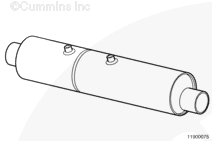
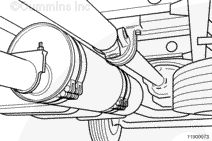
Remove the exhaust gas filter assembly from the vehicle. Refer to the vehicle manufacturer’s service manual.
NOTE: It may be possible to remove the V-band clamps and separate the exhaust gas filter as listed in the Disassemble step with the exhaust gas filter assembly still installed in the vehicle.
This component or assembly weighs greater than 23 kg [50 lb]. To prevent serious personal injury, be sure to have assistance or use appropriate lifting equipment to lift this component or assembly.
Lower the exhaust catalyst from the underside of the vehicle/application.
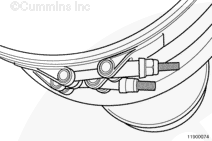
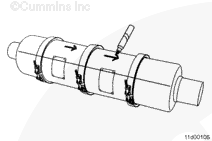
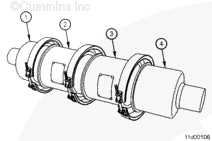
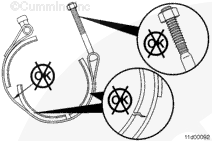
Remove the V-band clamps holding the sections together. Separate the mating sections by approximately 13 mm [0.5 in] to allow removal over the gasket retainer rings.
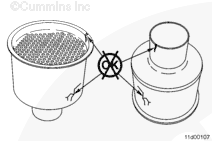
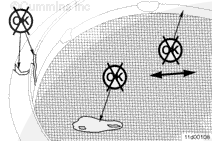
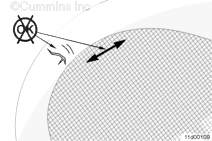
Check the inlet and outlet face of the catalyst section for:
Fuel, oil, or coolant buildup. A fluid soaked exhaust gas catalyst will have a glossy sheen and a strong fuel or oil odor. Replace the exhaust gas filter catalyst section if any damage is found.
Cracks or gouges deeper than 4 mm [0.156 in]. Replace the exhaust gas filter catalyst section if any damage is found.
If the exhaust gas filter catalyst section has shifted, moved or is loose inside the canister, replace the exhaust gas filter catalyst.
The catalyst substrate contains Vanadium Pentoxide. Vanadium Pentoxide has been determined by the State of California to cause cancer. Always wear protective gloves, dust mask and eye protection when handling the catalyst assembly. Do not get the catalyst material in your eyes. In case of contact, immediately flood eyes with large amounts of water for a minimum of 15 minutes. Avoid prolonged contact with skin. In case of contact, immediately wash skin with soap and water. Refer to the Materials Safety Data Sheet (MSDS) for additional information.
Remove any loose paint, corrosion, from exhaust catalyst sealing surfaces with a wire brush.
Excessive fuel or oil buildup will damage the exhaust catalyst. If oil from an upstream engine failure is visible in the exhaust plumbing, replace the catalyst. If evidence of fuel in the exhaust stream is apparent and Fault Code 1687 occurs, replace the catalyst.
NOTE: Prior to the replacement of the exhaust catalyst, the source of the upstream failure must be identified and corrected. If the exhaust catalyst is replaced due to progressive damage from engine oil or fuel contamination, clean the tailpipe from the turbocharger outlet to the exhaust catalyst.
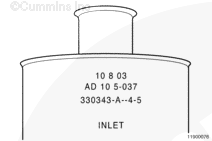
Assemble the sections of the exhaust gas filter. Use the V-band clamps and new gaskets. Make sure marks on the exhaust side of the catalyst and filter sections are aligned with the outlet.
This component or assembly weighs greater than 23 kg [50 lb]. To prevent serious personal injury, be sure to have assistance or use appropriate lifting equipment to lift this component or assembly.
Install the exhaust gas filter assembly into the vehicle. Refer to the OEM service manual.
The catalyst substrate contains Vanadium Pentoxide. Vanadium Pentoxide has been determined by the State of California to cause cancer. In the event the catalyst is being replaced, dispose of in accordance with local regulations. Do not cut open the exhaust catalyst assembly.
Hello, I'm Jack, a diesel engine fan and a blogger. I write about how to fix and improve diesel engines, from cars to trucks to generators. I also review the newest models and innovations in the diesel market. If you are interested in learning more about diesel engines, check out my blog and leave your feedback.
View all posts by Jack
 WARNING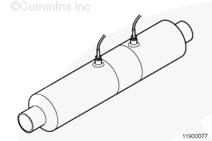







;)
;)
;)
;)
;)
;)
;)
;)
;)
;)
;)
;)
;)
;)
;)
;)
;)
;)
;)
;)
;)
;)
;)
;)
;)
;)