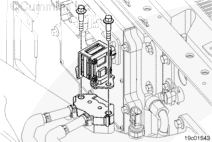
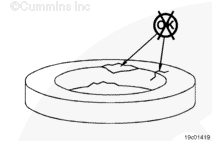
Clean the exhaust gas recirculation (EGR) differential pressure sensor and adapter mounting surfaces. Remove any dirt build-up or soot residue.
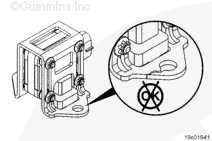
Inspect the EGR differential sensor bracket for cracks or fretting. If damage is present, the sensor must be replaced. The bracket is not a serviceable component.
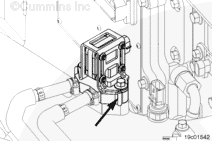
Make sure the sensor is installed correctly. Verify that the sensor connector is facing inward toward the engine on the ISX engine. There is a locating feature or raised nub located on the sensor adapter to aid in the installation of the sensor. This raised nub is located on the outside and rearward edge of the sensor adapter. If installed correctly, the sensor will sit flat on the sensor adapter and will clear the raised nub.
On the ISM engine, the sensor connector will be facing outward away from the engine. There is a locating feature as well on the sensor adapter for the ISM engine. The locating feature is located at the inward and rearward edge of the sensor adapter. If installed correctly, the sensor will sit flat on the sensor adapter and will clear the raised nub.
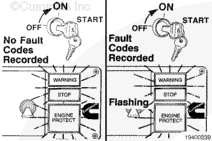
Start the engine and verify proper operation (no fault codes).
NOTE: An active EGR differential pressure sensor fault code requires a certain procedure, once the repair is complete, to get the fault code to go inactive. The engine must be started and the engine coolant temperature must be above 68°C [154°F] and the intake manifold air temperature must be above 7°C [45°F]. Shut the keyswitch off for 30 seconds and turn the keyswitch back on. The fault code will then transition to inactive.
Hello, I'm Jack, a diesel engine fan and a blogger. I write about how to fix and improve diesel engines, from cars to trucks to generators. I also review the newest models and innovations in the diesel market. If you are interested in learning more about diesel engines, check out my blog and leave your feedback.
View all posts by Jack






;)
;)
;)
;)
;)
;)
;)
;)
;)
;)