To reduce the possibility of property damage and personal injury, do not use starting fluids in a gaseous fueled engine.
CAUTION
Due to the potential for engine damage, do not use starting fluid. The use of starting fluid has no practical purpose as a cold weather starting aid in a gaseous fueled engine. The use of starting fluid will cause engine damage.
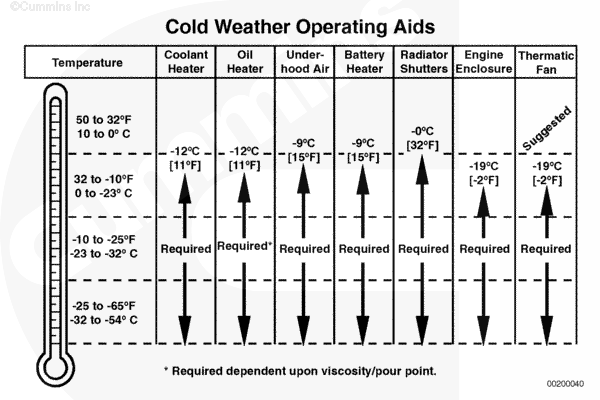
It is possible to operate gas engines in extremely cold environments if they are properly prepared and maintained. The correct lubricants, fuels, and coolant must be used for the cold weather range for which the vehicle is being operated. Refer to the chart below for recommendations in different operating ranges.
Winterize 0° to -23°C [32° to -9°F]
Winterize -23° to -32°C [-10° to -26°F]
Winterize -32° to -54°C [-25° to -65°F]
Use ethylene glycol antifreeze to protect to -29°C [-20°F]
Use 50 percent ethylene glycol antifreeze, 50 percent water mixture.
Use 60 percent ethylene glycol antifreeze, 40 percent water mixture.
Use multi-viscosity oils meeting API, CD specifications for natural gas engines.
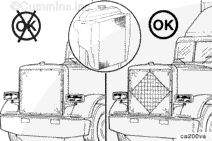
Winterfronts can be used on a vehicle equipped with a charge-air cooler, but must be designed to partially cover the frontal area of the cooling system. A minimum of 120 square inches (11-in x 11-in) of frontal area must be left open to air flow for the charge-air cooler to function correctly.
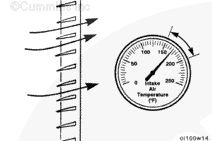
Installations of charge-air cooler engines with shutters also requires an air intake manifold air temperature switch to open the shutters to prevent excessive intake manifold temperatures. This prevents engine damage due to high intake manifold temperatures as a result of blocked air flow across the charge-air cooler.
Hello, I'm Jack, a diesel engine fan and a blogger. I write about how to fix and improve diesel engines, from cars to trucks to generators. I also review the newest models and innovations in the diesel market. If you are interested in learning more about diesel engines, check out my blog and leave your feedback.
View all posts by Jack
 WARNING
  CAUTION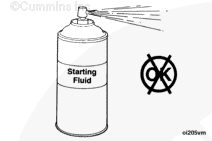
;)
;)
;)
;)
;)
;)
;)
;)
