To prevent damage to the starting motor, do not engage the starting motor for more than 30 seconds. Wait two minutes between each attempt to start (electrical starting motors only).
Check for free throttle operation.
Disengage the driven unit, or if equipped, put the transmission in neutral.
Position the fuel shutoff, electrical switch, or mechanical control to the RUN position.
With the accelerator pedal or lever in the idle position, Turn the keyswitch to the ON position.
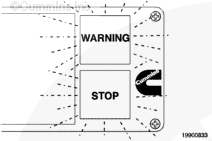
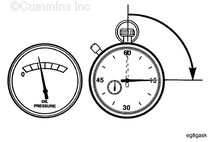
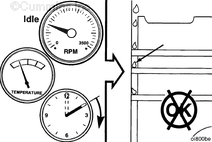
The engine must have adequate oil pressure within 15 seconds after starting. If the WARNING lamp indicating low oil pressure has not gone out or there is no oil pressure indicated on the gauge within 15 seconds, shut off the engine immediately to avoid engine damage.
If the engine does not start after three attempts, check the fuel supply system.
Engine oil pressure must be indicated on the gauge within 15 seconds after starting. If oil pressure has not registered within 15 seconds, shut off the engine immediately to avoid engine damage. Check the engine oil level.
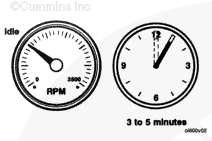
Do not operate the engine at low idle for long periods with the engine coolant temperature below the minimum specification found in the Maintenance Specifications in Section V.
Operating the engine at low idle for long periods can result in, but is not limited to, the following conditions:
Batteries can emit explosive gases. To reduce the possibility of personal injury, always ventilate the compartment before servicing the batteries. To reduce the possibility of arcing, remove the negative (-) battery cable first and attach the negative (-) battery cable last.
CAUTION
When using jumper cables to start the engine, make sure to connect the cables in parallel: Positive (+) to positive (+) and negative (-) to negative (-). When using an external electrical source to start the engine, turn the disconnect switch to the OFF position. Remove the key before attaching the jumper cables.
CAUTION
To reduce the possibility of damage to engine parts, do not connect jumper starting or battery charging cable to any fuel system or electronic component.
This illustration shows a typical parallel battery connection. This arrangement doubles the cranking amperage.
NOTE: Always reference the relevant OEM literature for jump starting procedures. Failure to follow correct procedures can result in damage to the ECM and other electrical equipment.
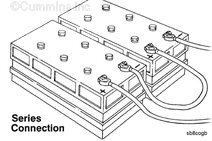
This illustration shows a typical series battery connection. This arrangement, positive (+) to negative (-), doubles the voltage.
NOTE: Always reference the relevant OEM literature for jump starting procedures. Failure to follow correct procedures can result in damage to the ECM and other electrical equipment.
Hello, I'm Jack, a diesel engine fan and a blogger. I write about how to fix and improve diesel engines, from cars to trucks to generators. I also review the newest models and innovations in the diesel market. If you are interested in learning more about diesel engines, check out my blog and leave your feedback.
View all posts by Jack
 CAUTION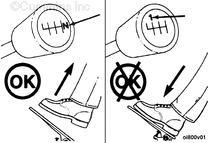

 WARNING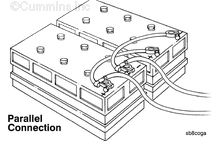
;)
;)
;)
;)
;)
;)
;)
;)
;)
;)
;)
;)
;)
;)
