Whenever a coil extension is removed, a new extension should be installed. Do not use an extension that has been separated from the ignition coil body.
Do not remove a coil extension unless the ignition coil does not pass the resistance check.
Do not use a coil extension with visible physical damage.
To reduce the possibility of personal injury, do not touch any ignition wires or components while the engine is operating, unless using suitably insulated tools.
CAUTION
The engine must not be running and the ignition switch must be in the OFF position when installing or removing the ignition coil tester to reduce the possibility of personal injury or equipment damage.
Disconnect the batteries. Refer to the OEM service manual.
Do not use electrical contact cleaner on the coil body or damage may result.
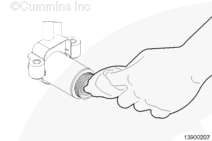
Use a clean, lint-free, cloth or equivalent, to remove any grease or debris from the threads, the electrode, and the grooves on the bottom of the ignition coil body.
Do not cross thread the coil extension to the ignition coil. Damage to the components can result.
CAUTION
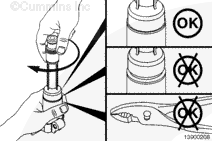
Do not use any tools to install the new coil extension. Damage to the components can result.
Whenever a coil extension is removed, a new extension should be installed. Do not use an extension that has been separated from the ignition coil body.
The new coil extension is pre-greased and does not require any additional grease prior to installation.
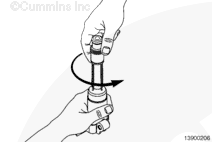
Align threads of the new coil extension with the threads on the ignition coil; Turn the coil extension counterclockwise until a slight click is felt, to help align the threads.
Turn the extension clockwise by hand only until the coil extension seats against the igntion coil body.
Hello, I'm Jack, a diesel engine fan and a blogger. I write about how to fix and improve diesel engines, from cars to trucks to generators. I also review the newest models and innovations in the diesel market. If you are interested in learning more about diesel engines, check out my blog and leave your feedback.
View all posts by Jack

 WARNING
  CAUTION





;)
;)
;)
;)
;)
;)
;)
;)
;)
;)