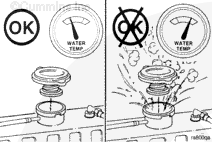
Do not remove the pressure cap from a hot engine. Wait until the coolant temperature is below 50°C [120°F] before removing the pressure cap. Heated coolant spray or steam can cause personal injury.
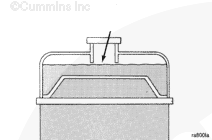
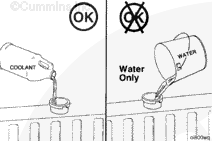
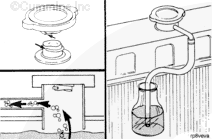
Allow the engine to cool and remove the radiator cap.
The engine coolant temperature must be stable to perform this test. An increasing coolant temperature will give a false indication of air due to expansion of the coolant in the system.
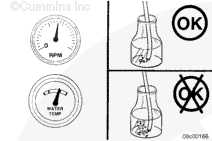
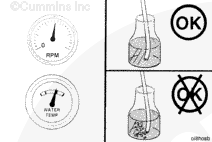
Operate the engine at rated rpm until it reaches 82°C [180°F].
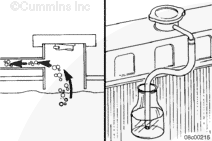
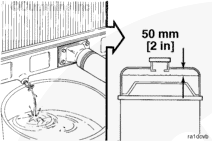
Check for a continuous flow of air bubbles from the hose into the water container.
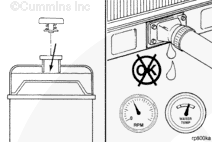
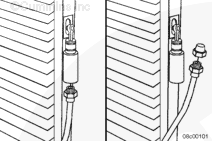
The engine can overheat with the fan control or the shutter air control valve disconnected. Monitor the engine coolant temperature while performing this test. The coolant temperature must not exceed 100°C [212°F] or engine damage can occur.
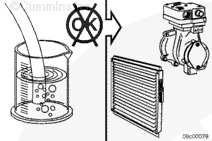
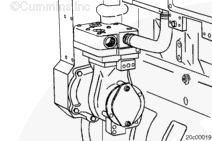
The air compressor discharge line must be disconnected at the compressor to allow the compressor to discharge air to the atmosphere during this next test to prevent the compressor from overheating. Do not run the engine over 5 minutes with components isolated from the cooling system. Component damage can occur.
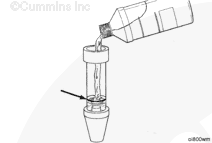
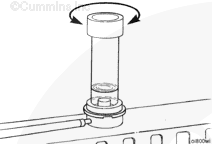
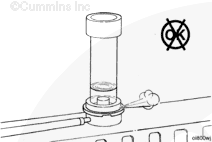
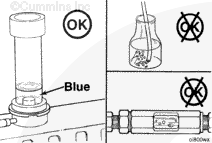
Insert the rubber tip of the combustion gas leak test instrument into the radiator fill neck. Hold the instrument down firmly and turn back and forth to make sure that an airtight seal is formed between the tester and the radiator fill neck.
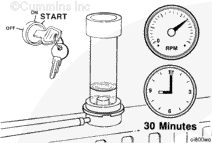
Start the engine and run at high idle for approximately 30 minutes. Monitor the engine temperature and color of the test fluid during engine operation. Do not allow the engine temperature to exceed 100°C [212°F] during the test.
A flow of bubbles will occur as the engine warms up and coolant expands.
Bubbles in the combustion analyzer is not a sign of a combustion leak.
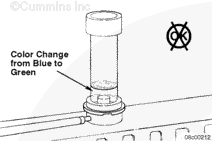
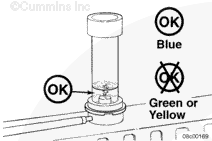
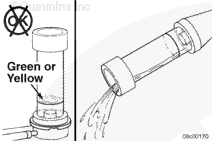
If the color of the test fluid changes from blue to green or yellow any time during the test, combustion gases are leaking into the cooling system. Discontinue the test if the color of test fluid changes from blue to green or yellow.
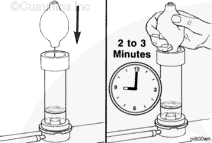
Insert the tip of the rubber ball into the hole in the top of the test instrument. Squeeze the rubber ball 2 to 3 minutes to draw air from the radiator through the test fluid.
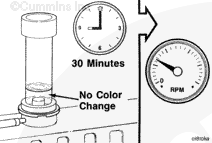
If the color of the test fluid remains blue, combustion gases are not entering the cooling system. If the color of the test fluid changes from blue to green or yellow, combustion gases are entering the cooling system and further investigation is required to determine the source of the combustion leak.
As the cooling system warms up to operating temperature, air will be expelled through the combustion gas tester in the form of bubbles in the test fluid. This is due to normal expansion of the coolant. Do not mistake the presence of air bubbles in the tester as combustion gases or air leaks into the cooling system. A change in the color of the test fluid from blue to green or yellow is the only indication of combustion gas in the cooling system.
Do not remove the pressure cap from a hot engine. Wait until the coolant temperature is below 50°C [120°F] before removing the pressure cap. Heated coolant spray or steam can cause personal injury.
Allow the engine to cool and remove the radiator cap.
The engine coolant temperature must be stable to perform this test. An increasing coolant temperature will give a false indication of air due to expansion of the coolant in the system.
Operate the engine at rated rpm until it reaches a temperature of 82°C [180°F].
Check for a continuous flow of air bubbles from the hose in the water container.
Hello, I'm Jack, a diesel engine fan and a blogger. I write about how to fix and improve diesel engines, from cars to trucks to generators. I also review the newest models and innovations in the diesel market. If you are interested in learning more about diesel engines, check out my blog and leave your feedback.
View all posts by Jack
 WARNING




 CAUTION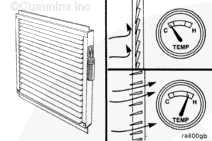


;)
;)
;)
;)
;)
;)
;)
;)
;)
;)
;)
;)
;)
;)
;)
;)
;)
;)
;)
;)
;)
;)
;)
;)
;)
;)
;)
;)
;)
;)
;)
;)
;)
;)
;)
;)
;)
;)
;)
;)
;)
;)
;)
;)
;)
;)
;)
;)