ISC, ISCe, QSC8.3, ISL, ISLe3, ISLe4 and QSL9 Engines – 008-018   Cooling System

Table of Contents

Drain
Flush
Fill

Drain

TOC

 WARNING 

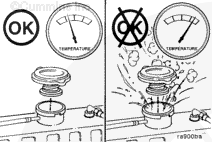
Do not remove the pressure cap from a hot engine. Wait until the coolant temperature is below 50°C [120°F] before removing the pressure cap. Heated coolant spray or steam can cause personal injury.

Remove the pressure cap.

SMALL | MEDIUM | LARGE


 WARNING 

Coolant is toxic. Keep away from children and pets. If not reused, dispose of in accordance with local environmental regulations.

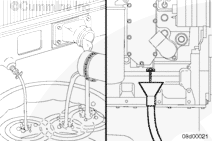
Drain the cooling system by opening the drain valve on the radiator and by opening the drain valve on the bottom of the engine oil cooler housing. A drain pan with a capacity of 57 liters [15 gal] is adequate in most applications.

After the cooling system is completely drained, close the drain valves. Refer to the OEM service manual for complete cooling system drain information.

SMALL | MEDIUM | LARGE


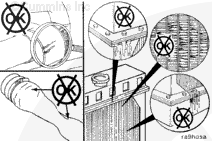
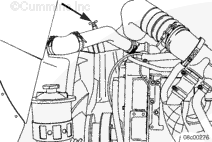
Check for damaged hoses and loose or damaged hose clamps. Replace as required.

Check the radiator for leaks, damage, and buildup of dirt.

Clean and replace as required.

SMALL | MEDIUM | LARGE
   

Flush

TOC

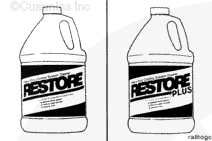
Fleetguard® Restore™ is a heavy-duty cooling system cleaner that removes corrosion, silica gel, and other deposits. The performance of Fleetguard® Restore™ is dependent on time, temperature, and concentration levels. An extremely scaled or flow-restricted system, for example, can require higher concentrations of cleaners, higher temperatures, longer cleaning times ,or the use of Restore Plus™. Up to twice the recommended concentration levels of Fleetguard® Restore™ can be used safely. Fleetguard® Restore Plus™ must be used only at its recommended concentration level. Extremely scaled or fouled systems can require more than one cleaning.

 
SMALL | MEDIUM | LARGE


 CAUTION 

Fleetguard® Restore™ contains no antifreeze. Do not allow the cooling system to freeze during the cleaning operation.
 CAUTION 

Opening the manual bleed valve on applicable installations is critical. Failure to do so can result in engine damage.

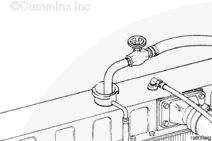
NOTE: Some applications can have a manual bleed valve that is required to be opened to properly fill the system. The upper radiator pipe is a common location for bleed valves. The illustration is for reference only.

If applicable, open the manual bleed valve before filling the cooling system.

Once filled, close the manual bleed valve.

 
SMALL | MEDIUM | LARGE


 WARNING 

Do not stand near surge tank or radiator while operating engine with pressure cap off. If the vehicle is equipped with a fill door on side of surge tank, keep it closed due to coolant expansion.
 CAUTION 

Fleetguard® Restore™ contains no antifreeze. Do not allow the cooling system to freeze during the cleaning operation.
 CAUTION 

Opening the manual bleed valve on applicable installations is critical. Failure to do so can result in engine damage.
 CAUTION 

The system must be filled properly to prevent air locks or serious engine damage can result. During filling, air must be purged from the engine coolant passages. Make sure to open the petcock on the aftercooler for aftercooled engines. Wait 2 to 3 minutes to allow the air to be vented; then add the mixture to bring the coolant level to the top.

NOTE: Some applications can have a manual bleed valve that is required to be opened to properly fill the system. The upper radiator pipe is a common location for bleed valves.

If applicable, open the manual bleed valve before filling the cooling system.

Once filled, close the manual bleed valve.

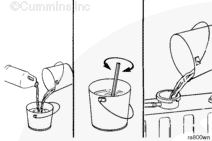
NOTE: Add 3.8 liters [1 gal] of Fleetguard® Restore™, Restore Plus™, or equivalent, for each 38 to 57 liters [10 to 15 gal] of cooling system capacity.

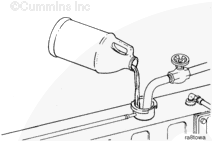
Fill the cooling system to the capacity or level stated in the OEM service manual. Use plain water.

Open all coolant flow valves to equipment heating systems. See the OEM service manual for valve locations.

Wait 2 to 3 minutes, without starting the engine, to allow the coolant level to stabilize.

Add plain water to bring the level back to FULL.

Turn all cab heater switches to HIGH in order to allow maximum coolant flow through the heater core(s). The blower does not have to be ON.

With the pressure cap off:

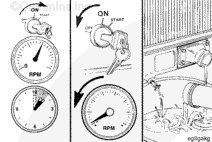
  • Operate the engine at LOW idle for 2 minutes.
  • Turn off the engine and add plain water to bring the level back to FULL.

With the pressure cap off:

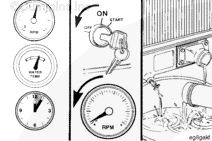
  • Operate the engine at LOW idle for 1 minute to allow adequate oil pressure to build throughout the engine.
  • Run the engine at HIGH idle until the thermostat opens.

Allow the engine to idle 2 minutes before shutting it down. This allows adequate cool down of pistons, cylinders, bearings, and turbocharger components.

Turn engine OFF and check the coolant level according to the OEM service manual recommendations and add, if necessary, to bring it back to the FULL level.

Install the pressure cap.

 
SMALL | MEDIUM | LARGE


 WARNING 

Do not remove the pressure cap from a hot engine. Wait until the coolant temperature is below 50°C [120°F] before removing the pressure cap. Heated coolant spray or steam can cause personal injury.
 WARNING 

Coolant is toxic. Keep away from children and pets. If not reused, dispose of in accordance with local environmental regulations.

Operate the engine at normal operating temperatures, at least 85°C [185°F], for 1 to 1 ½ hours.

Shut the engine OFF, allow to cool to 50°C [122°F], and drain the cooling system.

SMALL | MEDIUM | LARGE


 WARNING 

Do not stand near surge tank or radiator while operating engine with pressure cap off. If the vehicle is equipped with a fill door on side of surge tank, keep it closed due to coolant expansion.

Remove the pressure cap.

Fill the cooling system to the capacity or level stated in the OEM service manual. Use clean water.

Open all coolant flow valves to equipment heating systems. See the OEM service manual for valve locations.

Wait 2 to 3 minutes, without starting the engine, to allow the coolant level to stabilize.

Add clean water to bring the level back to FULL.

Turn all cab heater switches to HIGH in order to allow maximum coolant flow through heater core(s). The blower does not have to be on.

With the pressure cap off:

  • Operate the engine at LOW idle for 2 minutes.
  • Turn the engine OFF and add plain water to bring the level back to FULL.

With the pressure cap off:

  • Operate the engine at LOW idle for 1 minute to allow adequate oil pressure to build throughout the engine.
  • Run the engine at HIGH idle until the thermostat opens.

Continue to operate the engine at HIGH idle for 5 minutes with the coolant temperature above 85°C [185°F].

Allow the engine to idle 2 minutes before shutting it down. This allows adequate cool down of pistons, cylinders, bearings, and turbocharger components.

SMALL | MEDIUM | LARGE


 WARNING 

Do not remove the pressure cap from a hot engine. Wait until the coolant temperature is below 50°C [120°F] before removing the pressure cap. Heated coolant spray or steam can cause personal injury.
 WARNING 

Coolant is toxic. Keep away from children and pets. If not reused, dispose of in accordance with local environmental regulations.

Shut off the engine, allow it to cool to 50°C [122°F], and drain the cooling system.

If the water being drained is still dirty, the system must be flushed again, until the drained water is clean.

SMALL | MEDIUM | LARGE
   

Fill

TOC

 CAUTION 

Opening the manual bleed valve on applicable installations is critical. Failure to do so can result in engine damage.

NOTE: Some applications can have a manual bleed valve that is required to be opened to properly fill the system. The upper radiator pipe is a common location for bleed valves. The illustration is for reference only.

If applicable, open the manual bleed valve before filling the cooling system.

Once filled, close the manual bleed valve.

 
SMALL | MEDIUM | LARGE


 CAUTION 

The system must be filled properly to prevent air locks or serious engine damage can result. During filling, air must be purged from the engine coolant passages. Be sure to open the petcock on the aftercooler for aftercooled engines. Wait 2 to 3 minutes to allow the air to be vented; then add the mixture to bring the coolant level to the top.
 CAUTION 

During all coolant fill procedures, all coolant flow valves to equipment heating systems must be opened in order to purge air from those systems as well as from the base engine cooling system. These valves must remain open during the engine cooling system de-aeration process. Make sure adequate coolant levels are maintained in the coolant reservoir during the entire fill procedure. Special care must be taken when filling EGR cooler equipped engines to make sure all air is purged from the cooling system or serious engine damage can result.
 CAUTION 

Never use water alone for coolant. This can result in damage from corrosion.

The system has a designed fill rate of up to 19 liters [5 gal] per minute.

Refer to Procedure 018-018 in Section V.

 
SMALL | MEDIUM | LARGE


 WARNING 

Do not stand near surge tank or radiator while operating engine with pressure cap off. If the vehicle is equipped with a fill door on side of surge tank, keep it closed due to coolant expansion.

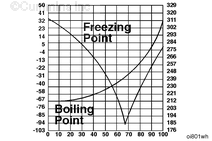
Low silicate antifreeze must be mixed with quality water at a 50/50 ratio (40 to 60 percent working range). A 50/50 mixture of antifreeze and water gives a -37°C [-34°F] freeze point and a boiling point of 109°C [228°F].

The actual lowest freeze point of ethylene glycol antifreezes is at 68 percent, The use of higher concentrations of antifreeze will raise the freeze point of the solution and increase the possibility of a silicate gel problem.

Remove the pressure cap.

Fill the cooling system to the capacity or level stated in the OEM service manual using a mixture of 50 percent water and 50 percent ethylene glycol or propylene glycol antifreeze.

Open all coolant flow valves to equipment heating systems. See the OEM service manual for valve locations.

Wait 2 to 3 minutes, without starting the engine, to allow the coolant level to stabilize.

Add a 50/50 mixture to bring the coolant level back to FULL.

Turn all cab heater switches to HIGH in order to allow maximum coolant flow through heater core(s). The blower does not have to be on.

With the pressure cap off:

  • Operate the engine at LOW idle for 2 minutes.
  • Turn the engine OFF and add coolant to bring the level back to FULL, using a 50/50 mixture.

With the pressure cap off:

  • Operate the engine at LOW idle for 1 minute to allow adequate oil pressure to build throughout the engine.
  • Run the engine at HIGH idle until the thermostat opens.

Allow the engine to idle 2 minutes before shutting it down. This allows adequate cool down of pistons, cylinders, bearings, and turbocharger components.

Turn the engine OFF and check the coolant level according to the OEM service manual recommendations and add, if necessary, to bring it back to the FULL level.

Install the pressure cap.

Refer to Procedure 018-018 in Section V.

SMALL | MEDIUM | LARGE
Last Modified:  12-Jul-2010