Batteries can emit explosive gases. To reduce the possibility of personal injury, always ventilate the compartment before servicing the batteries. To reduce the possibility of arcing, remove the negative (-) battery cable first and attach the negative (-) battery cable last.
WARNING
Do not remove the pressure cap from a hot engine. Wait until the coolant temperature is below 50°C [120°F] before removing the pressure cap. Heated coolant spray or steam can cause personal injury.
WARNING
Coolant is toxic. Keep away from children and pets. If not reused, dispose of in accordance with local environmental regulations.
Do not remove the pressure cap from a hot engine. Wait until the coolant temperature is below 50°C [120°F] before removing the pressure cap. Heated coolant spray or steam can cause personal injury.
WARNING
Coolant is toxic. Keep away from children and pets. If not reused, dispose of in accordance with local environmental regulations.
CAUTION
Use caution when draining coolant that coolant is not spilled or drained into the bilge area. Do not pump the coolant overboard. If the coolant is not reused, it must be discarded in accordance with local environmental regulations.
NOTE: The graphic shown here is of the QSC8.3 marine engine. The QSL marine engine is different only in that the expansion tank is located on the front of the engine and the vent line has p-clips securing the line.
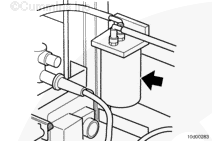
Remove the coolant vent line from the side of the turbocharger turbine housing and the coolant expansion tank.
On QSL9 engines, remove the p-clips which secure the line to the rocker lever housing.
Remove the coolant inlet hose clamps from the turbocharger turbine housing connection and the rear of the cylinder block. Remove the coolant inlet hose.
Remove the hose pipe fittings from the turbocharger turbine housing and the rear of the cylinder block.
When using solvents, acids, or alkaline materials for cleaning, follow the manufacturer’s recommendations for use. Wear goggles and protective clothing to reduce the possibility of personal injury.
WARNING
Some solvents are flammable and toxic. Read the manufacturer’s instructions before using.
WARNING
Wear appropriate eye and face protection when using compressed air. Flying debris and dirt can cause personal injury.
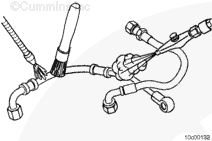
Clean the turbocharger coolant hoses with solvent.
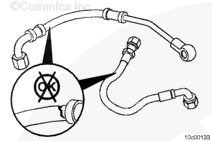
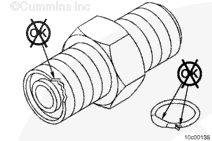
Check the face of the coolant fittings on the engine and on the turbocharger to make sure the o-ring is in place and is not damaged. A damaged or missing o-ring will result in a coolant leak.
Install the turbocharger coolant return line to the top of the turbocharger and the block.
Install the turbocharger coolant supply line to the bottom of the turbocharger and the block.
Check the face of the coolant fittings on the engine and on the turbocharger to make sure the o-ring is in place and is not damaged. A damaged or missing o-ring will result in a coolant leak.
NOTE: Use a second wrench to hold the coolant line coupling while tightening the line.
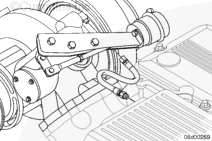
Install the pipe nipple at the rear of the cylinder block and the elbow at the bottom of the turbocharger turbine housing.
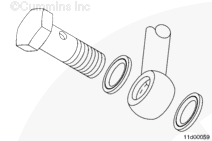
Align the elbow and tighten the banjo capscrew.
Torque Value: 160 n.m [118 ft-lb]
Install the molded coolant supply hose to the rear of the cylinder block and the bottom of the turbocharger turbine housing. Install the hose clamps and tighten.
Batteries can emit explosive gases. To reduce the possibility of personal injury, always ventilate the compartment before servicing the batteries. To reduce the possibility of arcing, remove the negative (-) battery cable first and attach the negative (-) battery cable last.
Hello, I'm Jack, a diesel engine fan and a blogger. I write about how to fix and improve diesel engines, from cars to trucks to generators. I also review the newest models and innovations in the diesel market. If you are interested in learning more about diesel engines, check out my blog and leave your feedback.
View all posts by Jack
 WARNING

 CAUTION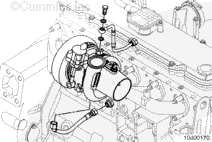




;)
;)
;)
;)
;)
;)
;)
;)
;)
;)
;)
;)
;)
;)
;)
;)
