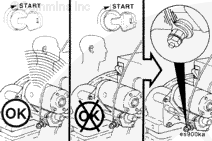
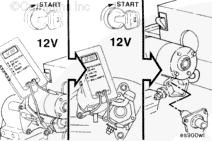
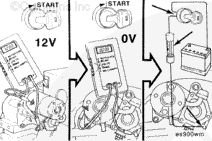
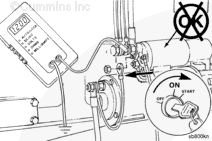
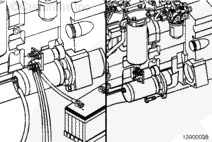
If the multimeter indicates system voltage at the starting motor battery terminal, check the voltage at the starting motor solenoid S terminal, when the starting switch is energized.
If the multimeter indicates system voltage at the S terminal, but the starter does not engage, the starting motor solenoid is malfunctioning and the starter must be replaced. Refer to Procedure 013-020 in Section 13.
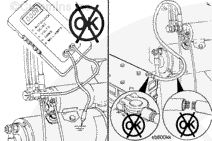
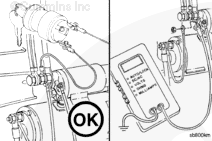
Set the digital multimeter, Part Number 3164488, to measure DC voltage.
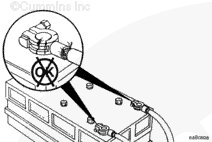
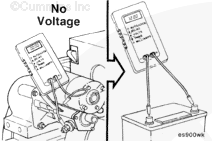
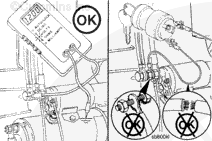
Connect the multimeter positive (+) lead to the starter solenoid positive cable terminal and the negative (-) lead to a chassis or engine ground location.
The multimeter must show a voltage with the starter switch “OFF” to be normal.
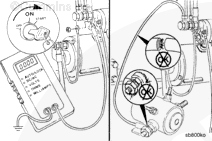
If the multimeter indicates a voltage, but the starter will not operate, check the wire connecting the starter solenoid to the starter switch for breaks.
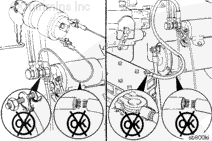
If the wire connecting the starter solenoid and starter switch is not loose or damaged, and the starter will not operate, remove the cable connecting the starter and starter solenoid from the solenoid terminal.
Connect the multimeter positive (+) lead to the solenoid positive (+) terminal and the negative (-) lead to the chassis or an engine ground location.
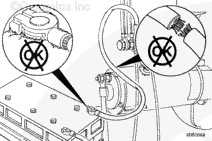
If the multimeter does not indicate a voltage, check the wire connecting the starter solenoid to the magnetic switch for breaks, and for loose or corroded connections.
If the wire connecting the starter solenoid to the magnetic switch is not loose or damaged and the starter will not operate, check the cable connecting the starter solenoid to the starting motor for breaks, and for loose or corroded connections.
Hello, I'm Jack, a diesel engine fan and a blogger. I write about how to fix and improve diesel engines, from cars to trucks to generators. I also review the newest models and innovations in the diesel market. If you are interested in learning more about diesel engines, check out my blog and leave your feedback.
View all posts by Jack






;)
;)
;)
;)
;)
;)
;)
;)
;)
;)
;)
;)
;)
;)
;)
;)
;)
;)
;)
;)
;)
;)
;)
;)
;)
;)