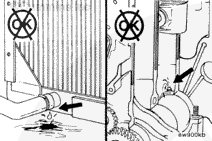
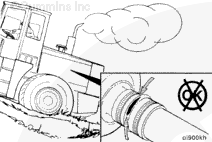
Overheating of the engine from a loss of coolant will cause the cylinder to overheat, resulting in seizure of the piston. Loss of piston cooling lubricating oil through blocked cooling nozzles can also lead to piston seizure.
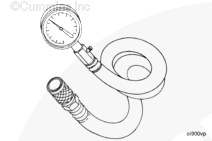
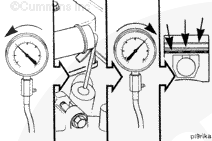
It is time consuming and expensive to begin removing internal engine components to diagnose failures. A compression gauge can be used as an aid to detect failures.
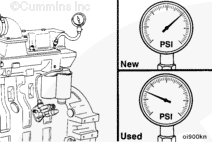
NOTE: Due to variables such as starter and battery conditions that affect engine cranking speed, it is difficult to establish an absolute value for compression pressure; however, the following values can be used as guidelines:
Natural Gas Engines
New engine (cranking speed at 250 rpm) 1931 kPa [280 psi]
Used engine (cranking speed at 250 rpm) 1586 kPa [230 psi].
Liquefied Petroleum Gas Engines
New engine (cranking speed at 250 rpm) 1655 kPa [240 psi]
Used engine (cranking speed at 250 rpm) 1310 kPa [190 psi].
It is recommended that the compression pressure be checked and compared on all cylinders. All cylinders should be within 207 kPa [30 psi] of each other.
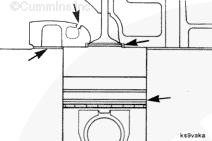
If the compression is low but can be increased significantly by squirting lubricating oil into the cylinder, the cause of low compression is inadequate sealing between the piston rings and the cylinder walls.
The cause of piston ring wear can range from wear over a long period of service to a dust-out in a short period because of poor maintenance of the air intake system.
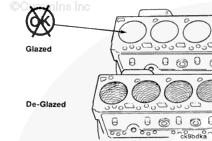
During repair, it is essential that the cylinder wall be deglazed so that new rings will seat against the cylinder wall. Failure of the rings to seat can result in high blowby and excessive oil consumption.
Coolant is toxic. Keep away from children and pets. If not reused, dispose of in accordance with local environmental regulations.
WARNING
Do not remove the pressure cap from a hot engine. Wait until the coolant temperature is below 50°C [120°F] before removing the pressure cap. Heated coolant spray or steam can cause personal injury.
Some state and federal agencies have determined that used engine oil can be carcinogenic and cause reproductive toxicity. Avoid inhalation of vapors, ingestion, and prolonged contact with used engine oil. If not reused, dispose of in accordance with local environmental regulations.
WARNING
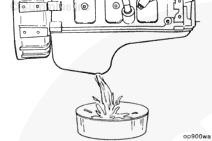
To reduce the possibility of personal injury, avoid direct contact of hot oil with your skin.
Drain the lubricating oil. Refer to Procedure 007-025.
After lubricating oil is drained, install the drain plug and a new sealing washer.
When using solvents, acids, or alkaline materials for cleaning, follow the manufacturer’s recommendations for use. Wear goggles and protective clothing to reduce the possibility of personal injury.
WARNING
Wear appropriate eye and face protection when using compressed air. Flying debris and dirt can cause personal injury.
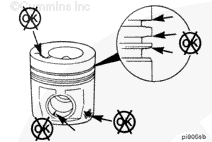
Wash the pistons again in a detergent solution or solvent.
Hello, I'm Jack, a diesel engine fan and a blogger. I write about how to fix and improve diesel engines, from cars to trucks to generators. I also review the newest models and innovations in the diesel market. If you are interested in learning more about diesel engines, check out my blog and leave your feedback.
View all posts by Jack


 WARNING


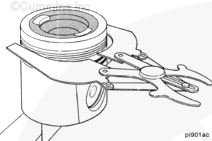
 CAUTION
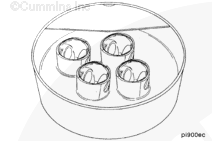
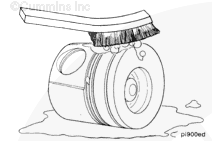
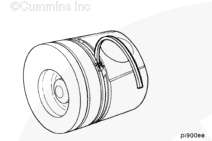


;)
;)
;)
;)
;)
;)
;)
;)
;)
;)
;)
;)
;)
;)
;)
;)
;)
;)
;)
;)
;)
;)
;)
;)
;)
;)
;)
;)
;)
;)
;)
;)
;)
;)
;)
;)
;)
;)
;)
;)
;)
;)