The engine run-in period allows the tester to detect assembly errors and to make final adjustments needed for performance that meets specifications.
NOTE: The amount of time specified for the following engine run-in phases are minimums. Additional time can be used, if desired, at each phase except engine idle periods.
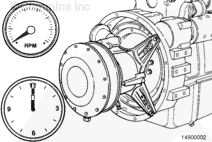
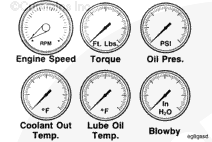
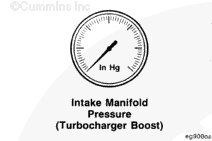
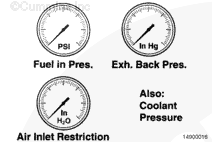
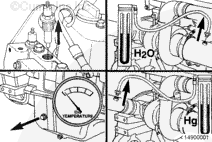
Measurements from these indicators and gauges must be observed closely during all phases of the engine run-in period. Refer to page 14-3 for specifications and acceptable readings.
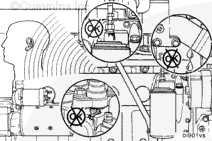
It is good practice to observe these measurements even if engine performance meets specifications. If engine performance does not meet specifications, these measurements can indicate possible reasons for under-performance.
Do not crank the engine for more than 30 seconds. Excessive heat will damage the starting motor.
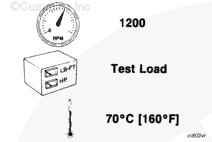
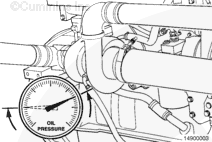
Crank the engine and observe the lubricating oil pressure when the engine starts. If the engine fails to start within 30 seconds, allow the starting motor to cool for 2 minutes before cranking the engine again.
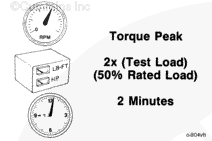
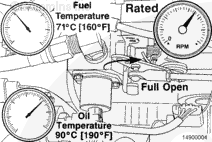
Open the throttle to the speed at which peak torque occurs, and adjust the dynamometer load to 50 percent of torque peak load. Operate the engine at this speed and load level for 2 minutes.
Check all gauges and record the data.
NOTE: Do not proceed to the next step until blowby is stable within specifications.
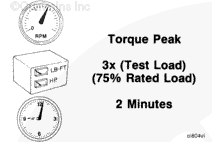
With the engine speed remaining at torque peak rpm, increase the dynamometer load to 75 percent of torque peak load. Operate the engine at this speed and load level for 2 minutes. Check all gauges and record the data.
NOTE: Do not proceed to the next step until blowby is stable within specifications.
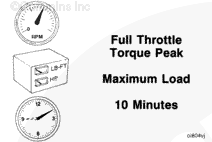
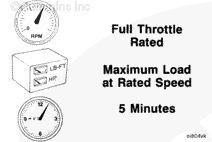
Move the throttle lever to its fully opened position, and increase the dynamometer load until the engine speed is at torque peak rpm. Operate the engine at this speed and load level for 10 minutes or until the blowby becomes stable within specifications.
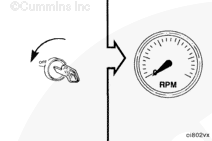
Shutting off the engine immediately after operating at full load will damage the turbocharger and internal components. Always allow the engine to cool before shutting it off.
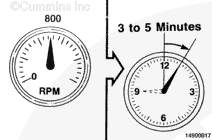
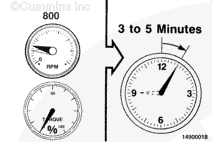
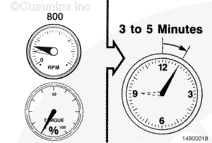
Remove the dynamometer load completely, and operate the engine at 700 to 800rpm for 3 to 5 minutes. This period will allow the turbocharger and other components to cool.
Do not crank the engine for more than 30 seconds. Excessive heat will damage the starting motor.
Crank the engine and observe the oil pressure when the engine starts. If the engine fails to start within 30 seconds, allow the starting motor to cool for 2 minutes before cranking the engine again.
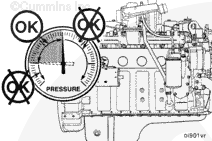
If the lubricating oil pressure is not within specifications, shut off the engine immediately. Low lubricating oil pressure will cause engine damage. Correct the problem if lubricating oil pressure is not within specifications.
Engine lubricating oil pressure must be at least 69 kPa
[10 psi] at approximately 700 rpm.
Do not shut off the engine immediately after it has been loaded. It must be allowed to sufficiently cool.
Remove the dynamometer load completely, and operate the engine at idle speed for 3 to 5 minutes. This will allow the turbocharger and other components to cool.
NOTE: Idle periods longer than 5 minutes are to be avoided.
Remove all test instrumentation. Remove the engine from the dynamometer.
NOTE: If the engine is to be stored temporarily and does not
have permanent-type antifreeze, it is necessary to drain all coolant. Drain locations are identified on the engine side views, page 14-2].
Prepare the engine for Engine Painting (Procedure 000-007).
Hello, I'm Jack, a diesel engine fan and a blogger. I write about how to fix and improve diesel engines, from cars to trucks to generators. I also review the newest models and innovations in the diesel market. If you are interested in learning more about diesel engines, check out my blog and leave your feedback.
View all posts by Jack



 CAUTION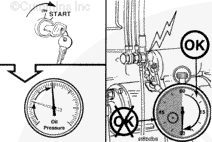

;)
;)
;)
;)
;)
;)
;)
;)
;)
;)
;)
;)
;)
;)
;)
;)
;)
;)
;)
;)
;)
;)
;)
;)
;)
;)
;)
;)
;)
;)
;)
;)
;)
;)
;)
;)
;)
;)
;)
;)