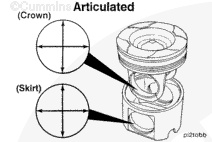
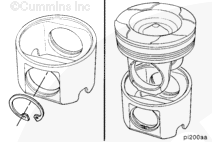
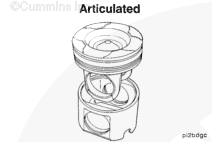
Some Signature, ISX, and QSX15 engines are equipped with articulated pistons.
The articulated piston is a two-piece piston consisting of a forged steel crown and an aluminum skirt.
An open chamber oil gallery is located on the underside of the crown of the piston to provide more oil contact with the piston and give better piston cooling. Piston cooling nozzle targeting is critical because the oil is captured in shaker trays.
All pistons within a given engine must be of the same design – all are to be either the articulated design or the single-piece design. Do not mix piston designs in the same engine. Single-piece pistons must have drilled rods and rod bearings. Articulated pistons can use either drilled or non-drilled rods and bearings.
When using solvents, acids, or alkaline materials for cleaning, follow the manufacturer’s recommendations for use. Wear goggles and protective clothing to reduce the possibility of personal injury.
CAUTION
To reduce the possibility of damage to the piston crown, the cleaning solvent must be approved for bushing material. If necessary, brush the piston crowns with a soft non-metallic brush. A metallic brush can damage the piston ring grooves.
It is only necessary to remove the carbon buildup. It is not necessary to make the crown appear to be new.
When using walnut shell blast to clean steel piston crowns, use the minimum recommended pressure and do not concentrate the blast in any one area for extended lengths of time. Make sure the pin bore area is protected from the blast so as not to damage the surface finish. Do not use walnut shell blast to clean aluminum piston skirts.
Do not use glass or plastic bead media to clean the piston crowns.
Carbon deposits can be cleaned from the piston crowns by soaking in an approved solution and/or by blasting with walnut shell media.
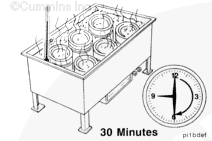
Soak steel pistons for at least 30 minutes in an approved cleaning solvent for steel and for brushing material. Use a hot soapy solution with a non-metallic brush to remove carbon deposits.
For best results, soak the pistons several hours or overnight.
When using solvents, acids, or alkaline materials for cleaning, follow the manufacturer’s recommendations for use. Wear goggles and protective clothing to reduce the possibility of personal injury.
CAUTION
If necessary, brush the piston crowns with a soft non-metallic brush. A metallic brush can damage the surface finish. Do not use glass, plastic, or walnut media to clean the aluminum piston skirts. This can damage the pin bore surface finish or prevent the rings from seating correctly in the ring grooves.
Soak aluminum pistons for a minimum of 30 minutes in a tank containing an approved cleaning solvent for aluminum. Use a hot soapy solution with a non-metallic brush to remove carbon deposits. Anything more abrasive will damage the surface finish.
When using solvents, acids, or alkaline materials for cleaning, follow the manufacturer’s recommendations for use. Wear goggles and protective clothing to reduce the possibility of personal injury.
CAUTION
To reduce the possibility of damage to the piston, the cleaning solvent must be approved for bushing material. If necessary, brush the pistons with a soft non-metallic brush. A metallic brush can damage the piston ring grooves.
It is only necessary to remove the carbon buildup. It is not necessary to make the crown appear to be new.
When using walnut shell blast to clean steel pistons, use the minimum recommended pressure and do not concentrate the blast in any one area for extended lengths of time. To prevent damage of the surface finish, make sure the pin bore area is protected from the blast.
Do not use glass or plastic bead media to clean the piston crowns.
Carbon deposits can be cleaned from the pistons by soaking in an approved solution and/or by blasting with walnut shell media.
Soak steel pistons for at least 30 minutes in an approved cleaning solvent for steel and for brushing material. Use a hot soapy solution with a non-metallic brush to remove carbon deposits.
For best results, soak the pistons several hours or overnight.
When using solvents, acids, or alkaline materials for cleaning, follow the manufacturer’s recommendations for use. Wear goggles and protective clothing to reduce the possibility of personal injury.
CAUTION
If necessary, brush the pistons with a soft non-metallic brush. A metallic brush can damage the surface finish.
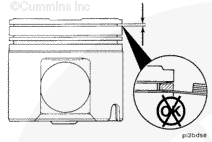
The ring groove can be inspected with a new ring and a feeler gauge.
Hold a new ring in the groove even with the outside diameter of the piston. Install a 0.15-mm [0.006-in] feeler gauge. If the feeler gauge enters the groove without resistance, there is too much wear. Replace the piston.
Hello, I'm Jack, a diesel engine fan and a blogger. I write about how to fix and improve diesel engines, from cars to trucks to generators. I also review the newest models and innovations in the diesel market. If you are interested in learning more about diesel engines, check out my blog and leave your feedback.
View all posts by Jack

 CAUTION



 WARNING