|
Starter Relay Circuit – Voltage Above Normal or Shorted to High Source
|

Overview
| CODE | REASON | EFFECT |
| Fault Code: 584 PID: S039 SPN: 677 FMI: 3/3 LAMP: Amber SRT: |
Starter relay circuit – Voltage above normal or shorted to high source. Open circuit or high voltage detected at starter lockout circuit. |
Either the engine will not start or the engine will not have starter lockout protection. |
|
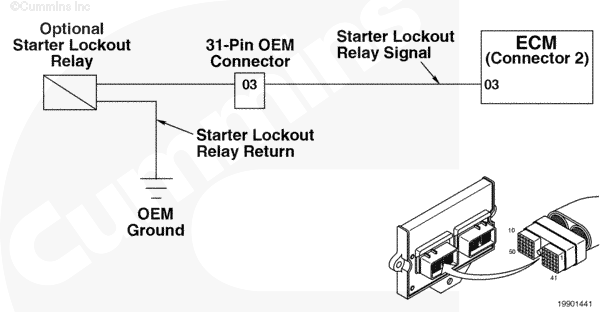
Starter Relay Circuit |
 |
Circuit Description
The starter lockout relay is controlled by the Electronic Control Module (ECM) through the starter lockout relay signal circuit. The relay prevents the starter from being engaged when the engine is running. The relay return circuit is dependent on Original Equipment Manufacturer (OEM) wiring. It is wired to chassis or block ground. Consult the OEM wiring diagram for return circuit details.
Component Location
The starter lockout relay is installed by the vehicle OEM. See the OEM service manual for exact location.
Shop Talk
The ECM monitors the voltage level on this circuit. If it detects a voltage when the signal is commanded off, it records this fault code. This fault can be caused by:
- Open circuit in the starter lockout relay, OEM harness, or connectors
- Short circuit to a voltage source in the OEM harness or relay.
Cautions and Warnings
 CAUTION CAUTION To reduce the possibility of damaging a new ECM, all other active fault codes must be investigated prior to replacing the ECM. |
|
CAUTION To reduce the possibility of pin and harness damage, use the following test leads when taking a measurement: |
Troubleshooting Steps
| STEPS | SPECIFICATIONS | |
|---|---|---|
| STEP 1. | Check the fault codes. | |
| STEP 1A. Check for an active fault code. | Fault Code 584 inactive? | |
| STEP 2. | Check the starter lockout relay and circuit. | |
| STEP 2A. Inspect the starter lockout relay and connector pins. | Dirty or damaged pins? | |
| STEP 2B. Check the resistance of the starter lockout relay. | Less than 10 ohms? | |
| STEP 2C. Check for an open circuit in the starter lockout relay return circuit. | Less than 10 ohms? | |
| STEP 3. | Check the OEM harness. | |
| STEP 3A. Inspect the OEM harness connector pins. | Dirty or damaged pins? | |
| STEP 3B. Check for an open circuit in the OEM harness. | Less than 10 ohms? | |
| STEP 3C. Check for a pin-to-pin short circuit in the OEM harness. | Greater than 100k ohms? | |
| STEP 3D. Check for an inactive fault code. | Fault Code 584 inactive? | |
| STEP 4. | Check engine control module and engine harness | |
| STEP 4A. Inspect engine control module and engine harness connector pins. | Dirty or damaged pins? | |
| STEP 4B. Check for an open circuit in the starter lockout supply in the engine harness. | Less than 10 ohms? | |
| STEP 4C. Check for a pin-to-pin short in the unswitched battery supplies in the engine harness. | Less than 100K ohms? | |
| STEP 4D. Check for an inactive fault code. | Fault Code 584 inactive? | |
| STEP 5. | Clear the fault codes. | |
| STEP 5A. Disable the fault codes. | Fault code 584 inactive? | |
| STEP 5B. Clear the inactive fault codes. | All fault codes cleared? | |
Guided Step 1 – Check the fault codes.
| Guided Step 1A – Check for an active fault code. | |
|---|---|
Conditions
ActionCheck for an active fault code.
|
|
|
Fault Code 584 inactive? |
|
| YES | NO |
|
Inactive or intermittent fault code. Refer to Procedure 019-362. |
No Repair |
Guided Step 2 – Check the starter lockout relay and circuit.
| Guided Step 2A – Inspect the starter lockout relay and connector pins. | |
|---|---|
Conditions
ActionInspect the OEM harness and starter lockout relay connector pins for the following:
For general inspection techniques, refer to Component Connector and Pin Inspection, Procedure 019-361. |
|
|
Dirty or damaged pins? |
|
| YES | NO |
|
A defective connection has been detected in the sensor or harness connector. Clean the connector and pins. Repair the damaged harness, connector, or pins if possible. See the OEM Wiring Harness, Procedure019-071. |
No Repair |
| Guided Step 2B – Check the resistance of the starter lockout relay. | ||
|---|---|---|
Conditions
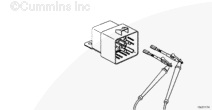
ActionCheck the starter lockout relay resistance.
Use the Original Equipment Manufacturer’s wiring diagram for starter relay pin configuration. For general resistance measurement techniques, refer to Resistance Measurements Using a Multimeter and Wiring Diagram, Procedure 019-360 |
|
|
|
Less than 10K ohms? |
||
| YES | NO | |
| No Repair |
Replace the starter lockout relay. See the OEM troubleshooting and repair manual. |
|
| Guided Step 2C – Check for an open circuit in the starter lockout relay return circuit. | ||
|---|---|---|
Conditions
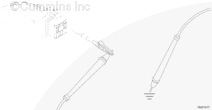
ActionCheck for an open circuit.
Refer to circuit description or circuit diagram for connector pin identification. For general resistance measurement techniques, refer to Resistance Measurements Using a Multimeter and Wiring Diagram, Procedure 019-360 |
|
|
|
Less than 10 ohms? |
||
| YES | NO | |
| No Repair |
An open circuit on the RETURN wire has been detected. See the OEM wiring diagram for RETURN wire configuration. If the RETURN is wired to the ECM, repair or replace the OEM harness. Refer to Procedure 019-071. If the RETURN wire is grounded to the chassis or engine block ground, repair the source of the failed connection. Clean, repair or replace the OEM harness. Refer to Procedure 019-071. |
|
Guided Step 3 – Check the OEM harness.
| Guided Step 3A – Inspect the OEM harness connector pins. | |
|---|---|
Conditions
ActionInspect the OEM harness and ECM connector pins for the following:
For general inspection techniques, refer to Component Connector and Pin Inspection, Procedure 019-361. |
|
|
Dirty or damaged pins? |
|
| YES | NO |
|
A defective connection has been detected in the OEM harness connector. Clean the connector and pins. Repair the damaged harness, connector, or pins if possible. |
No Repair |
| Guided Step 3B – Check for an open circuit in the OEM harness. | ||
|---|---|---|
Conditions
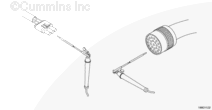
ActionCheck for an open circuit.
Refer to circuit description or circuit diagram for connector pin identification. For general resistance measurement techniques, refer to Resistance Measurements Using a Multimeter and Wiring Diagram, Procedure 019-360 |
|
|
|
Less than 10 ohms? |
||
| YES | NO | |
| No Repair |
An open circuit in the starter lockout relay SIGNAL line has been detected in the OEM harness. Repair or replace the OEM harness. Refer to Procedure 019-071. |
|
| Guided Step 3C – Check for a pin-to-pin short circuit in the OEM harness. | ||
|---|---|---|
Conditions
ActionCheck for a pin-to-pin short.
Refer to circuit description or circuit diagram for connector pin identification. For general resistance measurement techniques, refer to Resistance Measurements Using a Multimeter and Wiring Diagram, Procedure 019-360 |
|
|
|
Greater than 100k ohms? |
||
| YES | NO | |
| No Repair |
A piin-to-pin short circuit on the output device driver SIGNAL line has been detected in the OEM harness. Repair or replace the OEM harness. Refer to Procedure 019-071. |
|
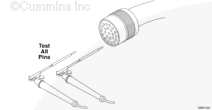
| Guided Step 3D – Check for an inactive fault code. | |
|---|---|
Conditions
ActionCheck for the appropriate circuit response after 30 seconds.
|
|
|
Fault Code 584 inactive? |
|
| YES | NO |
|
None. The removal and installation of the connector corrected the failure. |
No Repair |
Guided Step 4 – Check engine control module and engine harness.
| Guided Step 4A – Inspect engine control module and engine harness connector pin. | |
|---|---|
Conditions
ActionInspect the engine harness and engine control module connectors pins for the following:
For general inspection techniques, refer to Component Connector and Pin Inspection, Procedure 019-361. |
|
|
Dirty or damaged pins? |
|
| YES | NO |
|
A defective connection has been detected in the engine control module connectors or engine harness connectors. Clean the connector and pins. Repair the damaged harness, connector, or pins, if possible. Repair the harness. Refer to Procedure 019-204. Replace the harness. Refer to Procedure 019-043. |
No Repair |
| Guided Step 4B – Check for an open circuit in the starter lockout supply in the engine harness. | ||
|---|---|---|
Conditions
ActionCheck for an open circuit.
Refer to circuit description or circuit diagram for connector pin identification. |
|
|
|
Less than 10 ohms? |
||
| YES | NO | |
| No Repair |
An open circuit has been detected in the engine harness. Repair or replace the engine harness. Repair the damaged harness, connector, or pins, if possible. Repair the harness. Refer to Procedure 019-204. Replace the harness. Refer to Procedure 019-043. |
|
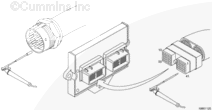
| Guided Step 4C – Check for a pin-to-pin short in the unswitched battery supplies in the engine harness. | ||
|---|---|---|
Conditions
ActionCheck for a pin-to-pin short.
Refer to circuit description or circuit diagram for connector pin identification. |
|
|
|
Less than 100K ohms? |
||
| YES | NO | |
| No Repair |
A pin-to-pin short has been detected in the engine harness. Repair or replace the engine harness. Repair the damaged harness, connector, or pins, if possible. Repair the harness. Refer to Procedure 019-204. Replace the harness. Refer to Procedure 019-043. |
|
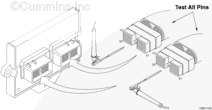
| Guided Step 4D – Check for an inactive fault code. | |
|---|---|
Conditions
ActionCheck for the appropriate circuit response after 30 seconds.
|
|
|
Fault Code 584 inactive? |
|
| YES | NO |
|
None. The removal and reinstallation of the connector corrected the failure. Refer to Procedure 019-031. |
Call for pre-authorization. Replace the engine control module. |
Guided Step 5 – Clear the fault code.
| Guided Step 5A – Disable the fault code. | |
|---|---|
Conditions
ActionDisable the fault code.
|
|
|
Fault Code 584 inactive? |
|
| YES | NO |
| No Repair |
Return to the troubleshooting steps or contact a local Cummins Authorized Repair location if all steps have been completed and rechecked. |
| Guided Step 5B – Clear inactive fault code. | |
|---|---|
Conditions
ActionClear the inactive fault code inactive
|
|
|
All fault codes cleared? |
|
| YES | NO |
| No Repair |
Troubleshoot any remaining fault codes. |
|
Repair complete
|
Appropriate troubleshooting steps
|

;)
;)
;)
;)
;)
;)
;)
;)
;)
;)
;)
;)
;)
;)