ISC, ISCe, QSC8.3, ISL, ISLe3, ISLe4 and QSL9 Engines – 010-024   Air Leaks, Air Intake and Exhaust Systems

Table of Contents

Initial Check

Initial Check

TOC

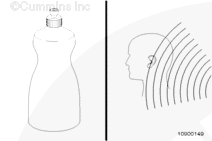
Leaks in the intake air system are most commonly identified by:

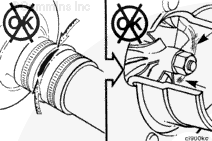
  1. Inspection of piping for cracked or loose clamps.
  2. Applying a solution of soapy water in the suspected area and inspecting for bubbles.
  3. Listening for a high-pitched whining or sucking noise in the suspected area.

SMALL | MEDIUM | LARGE


 CAUTION 

Engine intake air must be filtered to prevent dirt and debris from entering the engine. If intake air piping is damaged or loose, unfiltered air will enter the engine and cause premature wear.

SMALL | MEDIUM | LARGE


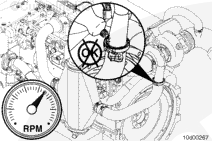
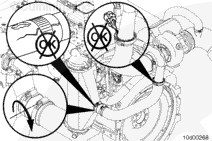
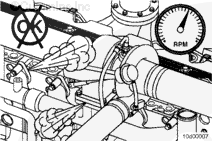
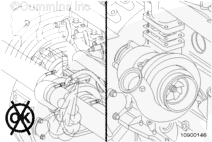
Inspect the inlet air piping for cracked hoses and damaged or loose clamps.

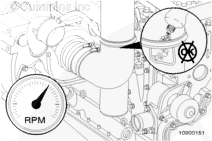
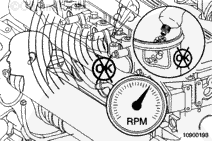
Operate the engine at high idle, and use a solution of soapy water to spot intake air leaks.

If an air leak exists, the soap bubbles will be drawn in with the air.

SMALL | MEDIUM | LARGE


Replace damaged pipes and tighten loose clamps to make sure the air inlet system does not leak.

Check for corrosion of the inlet system piping under the clamps and hoses. Corrosion can allow corrosive products and dirt to enter the intake system.

Disassemble and clean as required.

SMALL | MEDIUM | LARGE


Pressure Side Intake System:

Leaks in the intake system will reduce the amount of air to the cylinders during engine operation and decrease engine performance.

 
SMALL | MEDIUM | LARGE


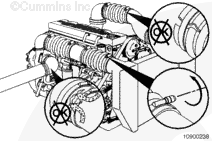
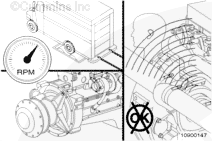
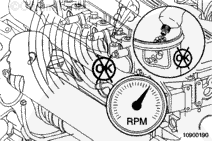
Operate the engine at full throttle and rated rpm with maximum load.

Listen for a high-pitched whistling sound from the turbocharger, nearby piping, and connections.

Apply a soapy water solution to sealing surfaces and inspect for bubbles. Bubbles can be easily detected.

SMALL | MEDIUM | LARGE


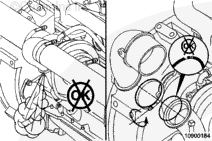
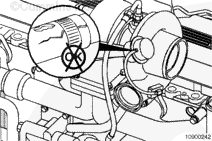
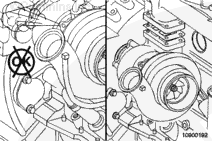
Leaks can also be found at the turbocharger compressor outlet connection.

Inspect for damage, replace sealing o-ring, and tighten loose clamps. Refer to Procedure 010-033 in Section 10.

SMALL | MEDIUM | LARGE


Charge Air Cooler Tubing or Connecting Hoses:

Inspect the hose and tubing for damage. Refer to Procedure 010-019 in Section 10.

Tighten loose clamps.

See the equipment manufacturer’s specifications for the correct torque value.

SMALL | MEDIUM | LARGE


Aftercooler or Aftercooler Hose Connections:

Inspect the aftercooler housing end caps, zinc anode plugs, and condensation valve for leaks. Refer to Procedure 010-005 in Section 10.

Inspect the air connection hoses and tubes for leaks. Refer to Procedure 010-019 in Section 10.

SMALL | MEDIUM | LARGE


Air Intake Connection:

Inspect for damage.

If necessary, replace the gasket or tighten loose clamps. Refer to Procedure 010-080 in Section 10.

SMALL | MEDIUM | LARGE


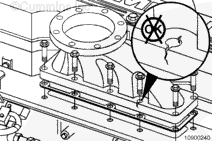
Intake Manifold:

Inspect for damage.

Replace the gasket, if necessary. Refer to Procedure 010-108 in Section 10.

SMALL | MEDIUM | LARGE


Wastegate Capsule/Plumbing:

Inspect for damage. Refer to Procedure 010-033 in Section 10.

SMALL | MEDIUM | LARGE


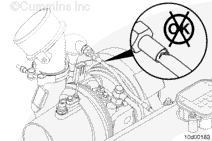
Variable Geometry Turbocharger Actuator Plumbing:

Inspect for cracks and/or air leaks. Refer to Procedure 010-033 in Section 10.

SMALL | MEDIUM | LARGE


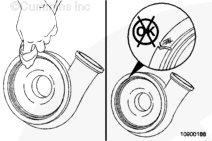
Compressor Housing Sealing Surface:

Inspect for damage. Refer to Procedure 010-033 in Section 10.

Clean surface with a clean cloth.

SMALL | MEDIUM | LARGE


Exhaust System:

Leaks in the exhaust system will cause the turbocharger to operate at a lower speed, reducing the amount of air going to the cylinders during engine operation.

 
SMALL | MEDIUM | LARGE


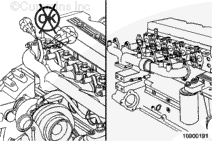
Operate the engine at full throttle and rated rpm with maximum load.

Leaks can be identified by noise, soapy water, or discoloration caused by the escaping hot gases.

SMALL | MEDIUM | LARGE


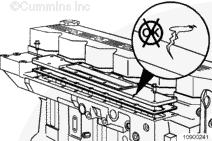
Inspect the exhaust manifold gaskets for leaks. Refer to Procedure 011-007 in Section 11.

Refer to Procedure 011-008 in Section 11.

SMALL | MEDIUM | LARGE


Inspect the turbocharger mounting gaskets for leaks. Refer to Procedure 010-033 in Section 10.

SMALL | MEDIUM | LARGE


Inspect the turbine housing sealing surface for leaks. Refer to Procedure 010-033 in Section 10.

SMALL | MEDIUM | LARGE


Operate the engine at full throttle and rated rpm with maximum load.

Listen and inspect again for leaks.

SMALL | MEDIUM | LARGE
Last Modified:  25-Oct-2009