Coolant is toxic. Keep away from children and pets. If not reused, dispose of in accordance with local environmental regulators.
WARNING
Do not remove the pressure cap from a hot engine. Wait until the coolant temperature is below 50°C [120°F] before removing the pressure cap. Heated coolant spray or steam can cause personal injury.
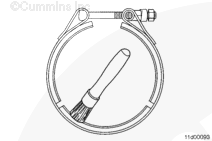
NOTE: Brush away all loose dirt from around the area of the air handling connections to avoid contamination of the interior of the engine.
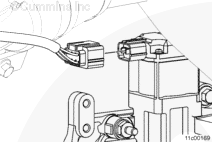
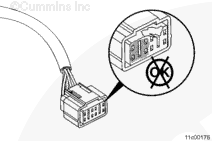
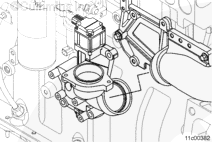
Disconnect EGR temperature sensor. See the following procedure in the Troubleshooting and Repair Manual CM871 and CM876 Electronic Control System, ISX and ISM Engines, Bulletin 4021560.Refer to Procedure 019-378 in Section 19.
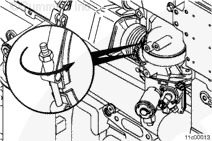
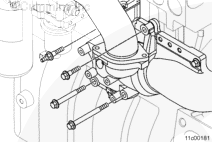
Disconnect the OEM fuel return hose from the integrated fuel system module. Refer to the OEM service manual. Or, loosen the fuel hose enough to position it away from the EGR valve mounting capscrew and tighten the fuel line.
Make sure to support the EGR valve by hand before removing the mounting capscrews. If the EGR valve is not supported, it can fall off of the engine, causing damage to the EGR valve and actuator.
Wear appropriate eye and face protection when using compressed air. Flying debris and dirt can cause personal injury.
WARNING
When using solvents, acids, or alkaline materials for cleaning, follow the manufacturer’s recommendations for use. Wear goggles and protective clothing to reduce the possibility of injury.
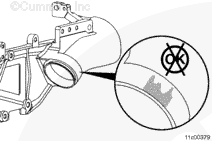
Check to make sure the EGR poppet head is present. If the poppet head is missing, run a stiff wire through every port of the exhaust manifold to locate the missing poppet head.
Do not assemble the engine without finding the missing poppet head.
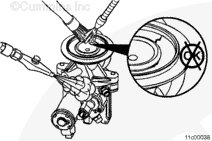
Clean the mounting surfaces with a shop towel wetted with a safety solvent to remove any deposits or debris.
Dry with compressed air.
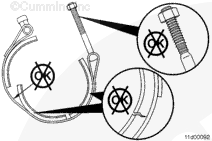
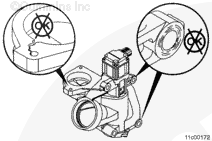
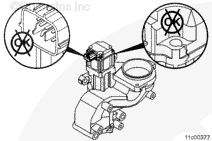
Inspect the mounting surfaces for cracks, fretting, or other damage. Inspect the EGR motor and position sensor for damage.
When using solvents, acids, or alkaline materials for cleaning, follow the manufacturer’s recommendations for use. Wear goggles and protective clothing to reduce the possibility of personal injury.
WARNING
Wear appropriate eye and face protection when using compressed air. Flying debris and dirt can cause personal injury.
Clean the EGR valve mounting and sealing surfaces with a shop towel wetted with safety solvent to remove any deposits or debris.
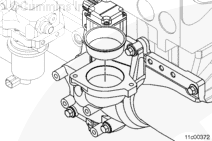
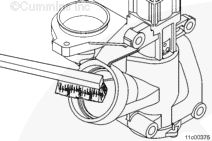
Clean the accumulated soot from the EGR valve inlet port using a wire brush, then soaking with carburetor cleaner and cleaning again with a wire brush. Be sure the loose soot is removed from the EGR valve housing. This can be done by vacuuming the soot out of the EGR valve inlet port.
Dry with compressed air.
Inspect the mounting surfaces for cracks, fretting, or other damage.
Inspect the EGR valve poppets for a stuck open condition. If the EGR valve is stuck open, replace the EGR valve. Do not try to pry the poppets open or closed.
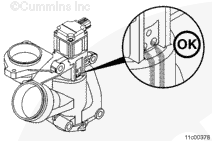
Soot leakage at the EGR valve weep hole is normal and is to be expected. Do not replace the EGR valve if soot streaks are found at the EGR valve weep hole.
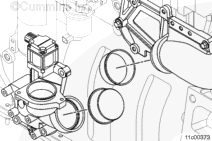
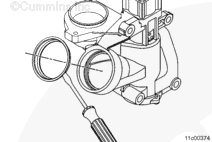
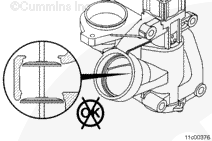
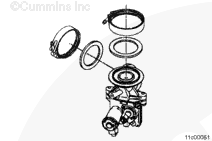
Use a light coat of clean engine oil to lubricate the outer diameter of the EGR valve seal during assembly on to the EGR valve. Push the EGR valve seal into the EGR valve inlet port by hand. The EGR seal must remain square in the EGR valve inlet port during installation.
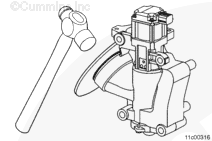
Hammer the EGR valve seal fully; use a flat piece of steel across the EGR valve seal. The EGR valve seal must be fully seated onto the EGR valve inlet port shoulder.
Connect the OEM fuel return hose from the integrated fuel system module. Refer to the OEM troubleshooting and repair manual.
Connect the EGR temperature sensor. See the following procedure in the Troubleshooting and Repair Manual CM871 and CM876 Electronic Control System ISX and ISM Engines, Bulletin 4021560. Refer to Procedure 019-378 in Section 19.
Operate the engine and check for exhaust or coolant leaks.
Verify active fault codes. If a failure resulted in coolant, oil, excessive fuel or excessive black smoke entering the exhaust system, the aftertreatment system must be inspected. Refer to Procedure 014-013 in Section 14.
Hello, I'm Jack, a diesel engine fan and a blogger. I write about how to fix and improve diesel engines, from cars to trucks to generators. I also review the newest models and innovations in the diesel market. If you are interested in learning more about diesel engines, check out my blog and leave your feedback.
View all posts by Jack
 WARNING










;)
;)
;)
;)
;)
;)
;)
;)
;)
;)
;)
;)
;)
;)
;)
;)
;)
;)
;)
;)
;)
;)
;)
;)
;)
;)
;)
;)
;)
;)
;)
;)
;)
;)
;)
;)
;)
;)
;)
;)
;)
;)
;)
;)